Showing posts with label survival. Show all posts

Saturday, April 04, 2020

THE BIOSCARF -- especially now


The Bioscarf: A big scarf with a built-in N95 filter


PRODUCT REVIEW

By Christopher Nyerges

[Nyerges is the author of “How to Survive Anywhere,” “Foraging California,” “Extreme Simplicity,” and other books. He has been leading survival classes since 1974.  More information at www.SchoolofSelf-Reliance.com]


BIOSCARF SPECS

Weight:  19.4 oz

Width:  84 inches

Length: 9 inches

Material:  100% polyester that is made from recycled PET water bottles and recycled PVC

Source:  https://www.g95.com/?rfsn=3861014.66a45d


I recently had the opportunity to test something called the “bioscarf.”  Yes, it’s a scarf, and everyone knows I like scarfs.  I’ve worn them all my life.  I used to love alpaca wool scarves, and find their comfort impeccable.  But then I was given a Polartech scarf, which is a polyester product that strives to duplicate wool without any itching or scratching.  I have come to prefer my Polartech scarves, which are also easy to clean and dry. 


I like long scarves too, but not the very long scarves that really get in the way.  I cannot get the story of the famous dancer Isadora Duncan out of my mind, who loved very very long silk scarves, and she enjoyed wearing them in her convertible.  She was 50 years old at the time, she was driving one day in September, 1927 in Nice, France, and her enormously-long scarf got caught in the rear hubcabs of her car!  It was a ghastly accident and she was strangled to death.  When you read about Duncan, you’d think her great legacy is that she had a famous dancing career, but the first think you read about is that she was strangled to death by her scarf.   Well, I don’t drive a convertible and I cannot imagine wearing a scarf that must have been 10 or 12 feet long, or longer!


Anyway, the bioscarf that I had the opportunity to use and test actually measures in at seven feet long, and 9 inches wide. That’s big, but not too big to get caught in your car’s or motorcycle’s wheels.  Bicyclists should be careful though.


I like its size.  It’s long, but not quite too long.  You have enough scarf to know you’re wearing a scarf and not forget it.  It comes in white, olive, black, and camo, and since I had the choice of color, I couldn’t resist the camo.  But its main selling point is not the size – it’s what’s hidden inside the fabric.


Bioscarf is actually a stylish air mask that keeps your neck and head cozy while filtering out unwanted air contaminants, germs, second hand smoke, pollen and other allergens. This can protect you from colds, flus, pneumonia, tuberculosis and allergens.  Bioscarf is the first scarf with an N95 air filter layer built right into the inner layer  of the scarf.


When tested by Nelson Labs against normal masks and respirators,  the bioscarf outperformed some of the most popular masks available today with a 99.75% average filtration efficiency. In addition to doing its job effectively,  the bioscarf is made from sustainable materials. Post-consumer recycled PET water bottles go into the fabric, while the signature labels are made from recycled PVC. It is also built to be long lasting and reusable, meaning less disposable air filters in the landfill.   And this filter is reusable – just wash the scarf by hand from time to time after use.


So, if you’re in a situation where you might otherwise put on a face mask, you can just wrap the scarf over your mouth and nose, and breathe through it.  Maybe you’re an allergy sufferer, visiting somewhere with poor air quality, on you’re on a bus or plane where everyone is sneezing and coughing.   Maybe you’re on a campout and the smoke from the campfire is excessive.  Bioscarf will give you some protection.


I like the multi-use aspect of the bioscarf, and when I’m wearing mine, it gives me the feeling of being protected, as if I’m living in a Mad Max, Book of Eli, or Bladerunner, world.  Of course,  that’s a crazy idea, since everyone in those futuristic dystopian societies would probably be wearing rags.  Still, the bioscarf is one of those multi-purpose garments that you’ll be glad  you purchased. It’s functional, and provides a layer of protection that other scarves just don’t provide. 

They run about $45, and are available at eartheasy.com, or Amazon.


COMFORT

I’ve had the opportunity to wear this scarf in cold weather, and found it to be a bit warmer than a comparable scarf.  This is probably because it’s not just a single layer of fabric, but actually 3 layers.  The scarf is not thick however, and it has the comfortable feel of a “normal” scarf.   The length is a bit longer than most scarves, and so you have just a bit more fabric that you can wrap around your neck, or your face.


Washing Instructions: Hand wash only

Monday, September 17, 2018

Can Anything Be Learned from TV?


THE GOOD, THE BAD, THE UGLY

Can anything be learned from TV?


[Nyerges is an educator and author of nearly two dozen books, such as “Extreme Simplicity,” “How to Survive Anywhere,” “Self-Sufficient Home,” and others.  His web site is www.SchoolofSelf-Reliance.com]

I took a short lunch break today, sitting down on my couch and turning on the TV.  I wanted to hear the weather forecast, which I never did.

I first learned about a bicyclist who was killed in Torrance, and the killer simply drove away in his Toyota truck.  Shocking!  How is that  a person can run down someone on a bicycle, kill them, and then just drive off into the wild blue yonder?  As someone who looks at the non-sustainability of the Los Angeles area “machine,” I know that more and more of us should take to our bicycles and become a part of the solution.  As I sat shaking my head, I thought about my own lifetime of bicycling, and how I just started bicycling more, in part, inspired by a female friend who wrote about her bicycling to her job in Azusa from Highland Park. Wow!  I used to have difficulty biking to my job  in Pasadena from Highland Park  because I’d show up dripping in sweat and had no way to change or shower.

Drivers need to wake up, and realize that the bicyclist is your friend, and is a friend to the sprawling mass of Los Angeles County.  Don’t treat them as an irritation, or a fly to be swatted.  And bicyclists – some anyway – also need to wake up to the fact that their total 150 pounds of small mass is nothing compared to a minimum 2000 pound car.  I have never figured out why some bicyclists taunt auto drivers, and bicycle far from the curb in a way that makes them a target in a confrontation they can’t win.  As Rodney asked, “Can’t we all get along?”

Then, when I was about a third done with my soup, the news program began showing the wreckage of the aftermath of Hurricane Florence.  OMG! It was clearly not good for my digestion to see whole neighborhoods half underwater, houses turned into splinters, people crying for help, families in need of food and fresh water.  And I watched some of the remarkable rescuers who came out on boats and took people to dry land and brought supplies to those who needed it the most.  There were also showing a convenience store in some town that was being looted, and a few people were arrested. 

As C.S. Lewis so insightfully pointed out in the Screwtape Letters,  times of great stress and disaster brings out the worst in mankind, but somehow it also brings out the very best as well. Heroes are made and lives are changed.  I watched these dramas being played out on my TV screen as I pushed my empty soup bowl to the side and started for my half-sandwich (Subway vegetarian).

Floods of memories flowed through my mind as I recalled two of the best bits of advice for anyone preparing for disasters (or old age, for that matter):  Develop useful skills, and develop deep meaningful relationships with people.  Not “gather lots of stuff,” and not “make sure you have the biggest knife,” etc. ad nauseum.  Yes, stuff is important, but look what Florence did to all that stuff!  You can’t predict the weather, but we should be able to rely upon our own hard-earned skills and our deep friendships.

I didn’t have much time to watch TV, and my sandwich was nearly done, so I flipped around to other stations, and came up with a few ironclad rules of life, though of lesser importance than what I’ve already mentioned.

Number one:  If you have a small claims court case to settle, and you’re guilty, never, ever, under any circumstances, have Judge Judy try your case. She will not only expose you but will humiliate you as well. Try your luck with one of the local judges in a local, non-televised court.

Number two: If anyone from the Jerry Springer show ever calls you to come onto their show to meet some mystery person of your past, don’t even think about calling them back.  It will not turn out well.

Monday, September 03, 2018

The Four Illusions of Money


THE FOUR ILLUSIONS OF MONEY


[Nyerges is the author of several books including “How to Survive Anywhere,” “Extreme Simplicity,” and “Self-Sufficient Home.”  He has lectured, taught, and led field trips since 1974. He can be reached at www.SchoolofSelf-Reliance.com or Box 41834, Eagle Rock,CA 90041]

[EVERYONE SHOULD READ THIS-- PLEASE SHARE WIDELY]

During the early 1980s, I participated in the monthly WTI Plenary sessions which were held in Highland Park. These were all-day events where participants shared accounts of specific research they had been doing. I had been giving presentations on money-related topics, such as “What is money?,” “What is the Federal Reserve?,” “What is the IMF,” etc.


The money-related lecture that stirred up the greatest emotional response was “The Four Illusions of Money.”  I loosely based by presentation on an article by the same name that appeared in the winter 1979-80 issue of Co-Evolution Quarterly., written by Raspberry.  The presentation and discussion lasted about two hours, covering many facets and dealing with the comments and objections from the audience.  Here is a condensation of that presentation.


When people are queried, almost everyone says that they do not have enough money, and would like to have more. Furthermore, one of the most commonly-cited reasons given by people who continue to work at a job they dislike is to “make a lot of money.”  The reasons that this is such a ubiquitous goal – to make a lot of money – can be summed up in the four following rationales:


  1. A lot of money will let me be free to do what I want to do.
  2. People with a lot of money command more respect from others.
  3. I need more money for my family.
  4. Money is necessary for my security in old age.


Yes, there are many more such “illusions” that dance around money, but these four seemed to fairly concisely address all the secondary and corollary illusions.


These four statements are illusions about money. That means, these represent false perceptions of the world.  That is to say, when we embrace any or all of these four illusions, we are prevented from seeing the NON-monetary realities about our life and the choices that we make.


So let’s explore these one by one.


A lot of money will let me be free to do what I want to do.


One way to see through this illusion is to make a specific list of all your carefully-considered goals. These can be short-term and long-term goals. These can include travel, projects, achievements, possessions, skills (learning a new language), etc., but the list cannot include money.  Money cannot be a goal. Next, you should examine the list you made and begin to delineate precisely how you can go about achieving that goal.


Yes, of course, money can help accelerate the achievement of the goal.  Still, once  your goals are clearly established in  your own mind – and clearly differentiated from “passing wants” – you can steadily move forward, step by step, toward the achievement of that goal.  Money is incidental to this process, and must not be allowed to determine the choices you make and the steps that you take.


A large part of achieving a goal – perhaps the most important part – is to learn valuable life-enhancing skills that you wouldn’t have learned otherwise.


And many of the essential steps toward a goal involve working with other people. Working with other people develops strong friendships and relationships, and this requires that you must be – or become – reliable and trustworthy yourself.  This manner of pursuing and achieving goals should represent a true freedom from our enslavement to money, and should open you up to some truly life-enhancing experiences.


Remember, this perspective is offered as an alternative to “going out to make enough money so I can be free to do what I want to do.” 


One of the amazing insights that I gained while sharing this at our seminar was how many people actually had no clearly-defined goals at all. 


People with a lot of money command more respect from others.


This is demonstrably and abundantly false.  There is no reason to believe that people with “a lot” of money automatically command genuine respect (in fact, they don’t), or that people with “a lot” of money command respect because of the money. 


People who invite respect do so because of their personal qualities, talents, character, experience.  It may be the case that these very qualities are the reason a person has been able to earn “a lot” of money.  But money itself is not the basis for real respect.


How do I know this?  Look at what happens to those who claim respect for someone when the money is gone.


And also just try the following experiment for yourself.  Make a list of 25 people whom you respect. These must be people that you know personally and you interact with in some way, not just people that you know about from the TV or newspapers.  Do your best to attempt to “score” how much you respect them, using a system for example of listing each from 1 to 100, 100 being the highest level of respect.  Next, do your best to list the income (or net worth) or each of the individuals on your list.  In cases of genuine respect, you will rarely find  a correspondence between how much you respect that person and how much money they make.


I need more money for my family.


All too often, people use this fallacy as an excuse for doing something they would rather not do.  This rationale is especially typical of “bread-winners” who work extra hours and on weekends so they can pay for possessions and vacations that they believe their family needs and deserves. 


If you are getting more and more out of touch with your own family members because you are spending more and more time away from them supposedly so you can provide something more for them, then you are falling for this illusion.


It would be far more valuable for everyone if these bread-winners instead spent valuable time with their family members, and finding a way to re-orient the job and financial choices.


Sometimes the most valuable time spent with one’s children is the time  spent to teach and work with them to develop their own businesses. 


As for the myth of “quality time” over “quantity of time,” don’t believe it!  Your notion of “quality time” means very little to young people.  The best way to have quality time is to assure that you have sufficient time together.


Money is necessary for my security in old age.


I had barely spoken these words in my seminar presentation when the groans and loud objections were voiced.  Two men got into an argument over this point before I’d barely gotten started, and I had to tactfully break it up.  Yes, we have a lot of baggage about money, and getting older doesn’t make this any better.


Money is needed in many ways, of course, but personal security, inner and outer, cannot be purchased.


The real security that is most needed by elderly can be enhanced by money, but it can never be built solely upon money.   Inner security arises with the development of deep friendships, and with learning to be flexible and adaptable, for example, and these are not things that are in any way dependant upon money. 


In fact, one of the best ways to “prepare for old age” is to become the type of person – inwardly and outwardly – that other people will want to be around and work with. 


This means being competent, helpful, flexible, honest, moral, curious, always willing to learn and to share, generous, and so on.  And note that none of these virtues are either the intrinsic or exclusive virtues of the wealthy.  


Developing one’s character is clearly one of the best ways to prepare for the calamities that might strike any of us at any age, such as wars, depressions, social chaos, as well as a whole host of personal difficulties.


The discussion went on for another hour – heated at times – and fortunately no chairs or windows were broken.


[A continuation of this discussion of money can be found in Christopher Nyerges’ “Extreme Simplicity,” book available at bookstores, Amazon, and www.SchoolofSelf-Reliance.com.]


Thursday, August 30, 2018

"Field of Dreams" -- in Highland Park

Excerpt from Christopher's "Squatter in Los Angeles" book -- available from Kindle, or from the Store at www.SchoolofSelf-reliance.com.  The best $3 you'll ever spend!

"Field of Dreams" -- in Highland Park


I think I was just a natural dreamer and I believed that I could magically earn a very sufficient income by freelance writing and teaching, so this period of squatting gave me the luxuries to choose my life’s activities.


I continued to write newspaper columns, though I never earned much from them. I  began to work more actively on my first book about the uses of local wild plants. I continued to engage in metaphysical studies, and gardening, and conducting occasional wild food outings.


My garden never seemed highly productive but  I had a few of the tall red amaranth plants, some squash, a corn patch, some greens, and wild foods. It was probably my first successful corn patch. I didn’t plant the rows of corn that you see so often in gardens and on farms. Rather, in my approximately 10 by 20 foot corn patch, I had corn more of less evenly spaced.  I had wanted to try the so-called Three Sisters of the native Southwest, of corn, beans, and squash.


In the arid soil of the Southwest, the corn was planted first, and once it  arose, beans were planted at the base of the each corn. The beans’ roots fix nitrogen and this acts as a fertilizer to the corn. Squash was then planted as a sprawling ground cover to retain the valuable scant moisture of the desert.


I planted my corn in my wood chip patch, three seeds per hole about two feet apart.  Corn came up, and then I planted bean seeds.  Beans are usually an easy crop to grow, but not that many came up. Who knows, maybe the ducks ate them. I planted squash too. Not a desert squash but ordinary zucchini which did a good job as a ground cover and food producer. I loved the little garden, and at night when I sat at my plywood desk with my typewriter, I’d look out my window through the several feet tall corn patch to see the lights of the city below.  During the day, little birds would flock to the corn patch and eat bugs. I enjoyed the fact that this little garden that I created with my simple efforts was now teeming with wildlife.  It felt good just to look at it. It provided food for my body, food for wildlife, and food for my soul.


Not long after I started this patch – it was near Thanksgiving – David Ashley came by for a visit.  David had already moved into the neighborhood from wherever else he’d been living. He came up to the top of the hill where I was an illegal squatter. My housing status didn’t cause David to lower his regard for me.


I took David out into my garden, and we stood there talking about life. I pulled off a ripe ear of corn and handed it to him and picked one for myself.


“What’s this?” asked David.


“To eat,” I responded as I began to peel off the leaves and hairs on my average size ear of corn.  He took a bite of the sweet kernels.


“I didn’t know you could eat corn raw,” said David in a surprised voice.


“Yep, you can,” I told him as I chewed on my sweet cob.  David began to peel his and take some bites.


“Wow, that’s really good!” said David, chewing on more kernels. We stood there for a few moments, eating our corn, looking at the outside world through the stalks of corn that were taller than us. It was a quiet, special moment.


Eventually, David left, and over the ensuing months, I would occasionally hear David telling someone about his surreal experience eating raw corn in Christopher’s little corn patch, our own little “field of dreams.”

Sunday, August 26, 2018

On Urban Sustainability .... a beginning


To Create a Sustainable City, we must Re-Engineer our Thinking


Growing up in a suburb of Los Angeles, I did not have an immediate knowledge of where our food and water came from.  I turned on the faucet for water, plugged cords into the wall for electricity, and went to the store for food. Yes, my city had been engineered for me, and I was just mindlessly playing my role.


At a young age, I felt that there was something wrong with my ignorance. Even worse, no one else seemed to be aware of our unawareness.  Everything came from somewhere else.  One salvation for me was that my mother grew up on a farm, and would tell tales of the Great Depression and the Dust Bowl where many people had no food, and some starved to death. My mother’s family were poor by most standards, but they had 51 acres in rural Ohio and they fed themselves and many others. My mother’s stories inspired me to become an ethno-botanist, and to learn about how all plants were used in the past. 


Though I did not pursue the path of “urban planning,” I realized that I had many choices within the framework of my suburban life where I could ecologically engineer my life.


PERSONAL CHOICES

My first teenage forays were into backyard urban gardening and raising chickens in a tiny space.  I didn’t want to be dependent on commercial fertilizers and bug-sprays, so I learned the ages-old methods of agricultural, methods that people today call “organic” or “perma-culture.”  I learned that anyone could indeed produce at least some of their food in the least amount of space. 


Even in my late teenage years, I had critics who told me it was not practical to grow foods without artificial fertilizers and pesticides.  Really?  I followed the path of Fusuoka and his “One Straw Revolution,” and the Rodale family, and insisted on growing everything with nothing artificial. I learned to keep down the bug population with natural methods that had been practiced world-wide for millennia.  I knew that the so-called Green Revolution, based as it was on petroleum-based fertilizers and pesticides was partly a fraud, and was not sustainable into the future centuries.


I continued my botanical studies by learning about the uses of wild plants of the Native Americans. I found to my surprise that all the foods used by the indigenous population could still be found throughout my homeland, though it was necessary to hunt a bit more because of all the houses, roads, and modern landscaping that has taken over the land.  Yes, the engineering of the concrete city has destroyed much of the territory for these native foods, but they were not entirely gone.


 I began to eat these wild plants that had sustained people for millennia, and I incorporated them into my regular diet.  When I first began to share with others my excitement of these floral treasures, I  was treated with mostly apathy, sometimes scorn, and even pity.  I was amazed! 


RE-ENGINEERING MY OWN MIND

In the mid-1970s in Los Angeles County,  I began publicly teaching and writing about the practical skills of self-reliance and practical survival in the city.  I was not engineering the city, but I was working to engineer a new mindset that says we can live ecologically (and economically) in the city.


Today, there is a renaissance and a great interest in the knowledge of our ancestors.  And it’s never too late to begin to seek our roots, and to turn around some of habits of ecological suicide.  I believe that we can solve many of our problems today by looking to the past for some of our solutions.


Here in Southern California, we have barely gotten over a four-year drought, which has finally inspired politicians and water department movers-and-shakers to encourage the millions of people who live here to consume less water.  With water usage averaging about 131 gallons a day for Los Angeles residents, and an ever-growing population of about 5% a year, water must always be a concern, as it will always be for most major cities of the world. 


The mayor of Los Angeles, and water department officials, are encouraging people to tear out their lawns and install drought-tolerant plantings.  I encourage people to go even one step further. Actually, a few steps further.  Yes, learn about the wild plants which are edible and medicinal, and encourage them. They will grow without your care.  And never merely plant “ornamentals,” that is, plants who do not provide food, or medicine, or good mulch from their leaves.  Plant with a purpose to feed your body  and your soul. 


To help irrigate these useful plants, I’m a big proponent of simple grey-water recycling, where your sink and washing machine water are piped into your backyard garden or front yard orchard.  Not every single city dweller can do this, but enough can do it to make a large difference.  Yes, certain changes are essential, such as buying soaps that contain to dyes, colors, or harmful chemicals. Continuing education is a big part of self-reliance and sustainability.  Recycling your grey-water means that you are getting at least two uses from water which previously you used only once.  Practically speaking, for every gallon of water you recycle, you have effective created another gallon of water for your use which does not have to be imported from somewhere else!


With the population of Southern California that continually grows, there is the growing need for more food and more water, as a function of increased population.  This unfortunately means even more land paved over for more houses or apartments.  Thus, the very soil which all ancient civilizations knew was the foundation of a healthy society becomes more and more rare. This should not be the case, even though it seems all but inevitable.


Our very lifeblood is dependent on the soil in so many ways.  Water, food, everything.

However, urban people need to re-learn these very basic ecological principles.  Our very laws, and attitudes – especially in the more-“developed” countries -- work against our long-term sustainability.


URBAN SUSTAINABILITY

Here in Southern California, the green lawn is still the norm in the sprawling suburban flatlands.  Never-ending flows of water (from somewhere) is the expectation.  The mindset must turn around, and it will begin with enlightened individuals who see that inappropriate lifestyles in an over-populated dry terrain are the antithesis of survival. As attitudes change – and slowly they are – the laws of the land need to support the water-wise practices that support sustainability. 


As a lifelong-educator in the uses of common wild plants, I cringe when I see television advertisements for such products as Roundup, and others, designed to kill off the unwanted vegetation of urban gardens and landscapes.  You know, such plants as dandelions and other healthful herbs called “weeds” which they picture in their ads.


To me, a student of the wild plants and the things growing in the faraway and neglected places, using a chemical like Roundup to “clean up” a wild area is a sacriledge.  Further,  bankers and land investors do not necessarily see the land as a source of life, recreation, fulfillment, and community. Rather, increasingly, the desire is to extract the greatest financial benefit from the land. Land that has nothing built upon it is all too often described as “non-performing real estate.”  That is the mentality which has caused the urban sprawl to sprawl even further, while diminishing the very sustainability from the land that we all need.  “Engineering” the city should not be simply building ever-more structures on the diminishing landscape. We should be re-engineering our thinking so we can get more from less, in ways that are both healthful and ecological. 


THE QUIET REVOLUTION

I am a pioneer of the path of the green and sustainable revolution.  You won’t find me protesting in the streets for changes, but you might find me in a city council meeting, or in a garden, or in a wilderness area.  I work with people one at a time. I have found that once an individual sees that the so-called weeds in an empty field are actually great nutritious food or medicine, they suddenly take a very personal interest in protecting and caretaking the land. Once individuals learn that the water from their very households can water their own garden and herb-patch, they become quite alert and aware of the quality of any soaps they are using, and they begin to use only those that are biodegradable, as a result of enlightened self-interest.  Suddenly, living an ecological urban life becomes very personal.


There are many paths to urban sustainability. This is the path I have chosen.

Christopher Nyerges works to engineer a new mindset that says we can live ecologically (and economically) in the city. He has taught self-reliance and sustainability his entire life through the teaching of ethnobotany and principles of permaculture. Nyerges is the author of 23 books including “Self-Sufficient Home: Going Green and Saving Money,” “Extreme Simplicity: Homesteading in the City,” “How to Survive Anywhere,” and others. He is the co-founder of the School of Self-Reliance, and works actively with various non-profits for the goals of urban sustainability.


Friday, July 20, 2018

On Willow...


ON WILLOW


SPEAK TO US ON THE WAYS OF THE WILLOW

A lesson in learning how to learn


The wise man of the forest had been hailed by the people of the land, the eager pilgrims, to teach another lesson in the ways of nature. “Speak to us on the ways of the willow, oh kind sir,” asked one of the pilgrims. “The people are in great need, and it would benefit them greatly to learn the secrets of the prolific willow.”

The wise man listened intently, and told the pilgrim that he would teach the lesson on the morrow, and that the pilgrim should bring the families to the spot in the river where the willows grow around mid-day.

“Oh thank you kind sir,” said the pilgrim. “We shall be there, eager and ready to receive your lessons.”

On the following mid-day, the wise man was at the willows early, as the pilgrims began to trickle in.

It was a cool day as the pilgrims gathered around the riverbed area, near the tall and drooping willows.

“Oh, kind sir,” asked the elder pilgrim. “It is so chilly in this area. Perhaps we can build a small fire to warm up before you begin your talk?”

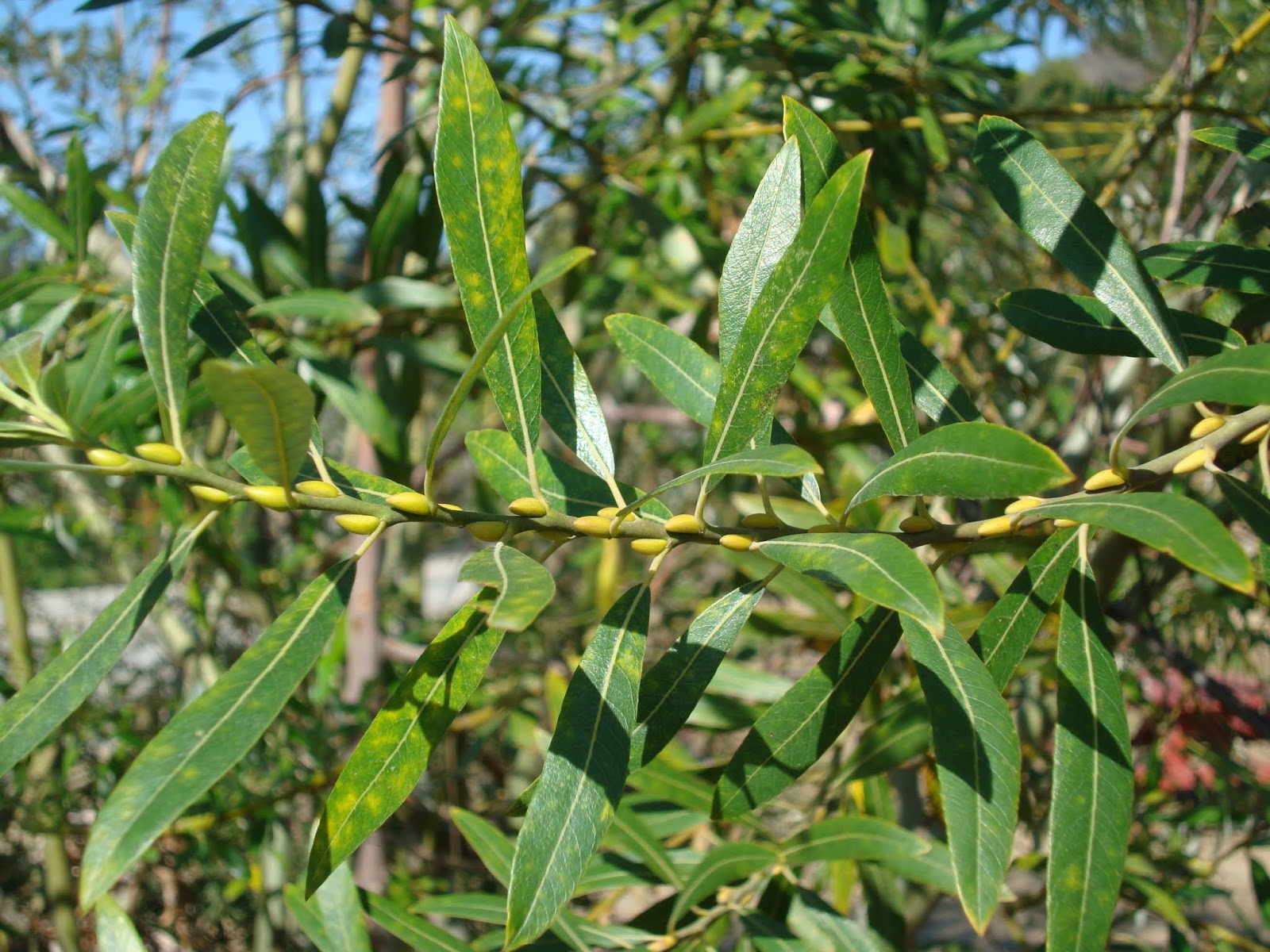
Without speaking, the wise man of the forest collected a long straight piece of dried willow. It was about as thick as a pencil, and about a foot and a half long. He took another dead and dried piece of willow branch, about as big around as his fist and maybe a foot long. As the pilgrims watched, the man of the forest first took his large knife and split the branch in half, and then further split the half so he had a flat rectangular piece of willow. All the pilgrims watched carefully as the wise man made a little triangular cut into the edge of the wood, and then he began to press the pencil-shaped piece of willow onto the flat piece. The wise man pressed hard, and begun to spin the willow drill onto the flat piece of willow, and soon smoke flowed from the friction. The wise man continued to spin thusly, and smoke poured out from the drilling. Soon, there was a red-hot ember in the dust that the wise man created.

The wise man quickly collected a bunch of dried willow bark from a dead branch, and scraped it with his knife to create a fluffy bunch of thin bark. He deftly placed the little ember into his nest of fluffy willow bark, and carefully blew on it until it puffed into a flame. He then placed it into a circle of stones, and added dry willow sticks so that the fire could grow and the pilgrims could warm themselves.

The wise man then began to collect his thoughts for his talk, when the leader of the pilgrims spoke up again.

“Kind sir, I don’t want to trouble you, but we have an elder here with pain in his legs. He cannot stand or sit comfortably on the floor. Is there something we can do for him?

The wise man nodded, and then proceeded to cut some of the dried and dead willow branches, those that were the straightest. He also peeled some long strands of the willow bark and put it to the side. First, the man of the woods created a square from the willows, and securely lashed the square. He then carefully measured, and then cut, willow branches that he then lashed to the square like legs, and the square because the seat of a chair. Taking a few more thick willow logs, he split them so they were flat, and secured these to the seat of the make-shift chair.

The wise man then helped the elder into the chair, cautioning him to sit carefully.

By now, the pilgrims had warmed some rice and vegetables on the fire, and one lamented to the wise man, “Too bad we didn’t bring forks and spoons.” The wise man whirled around back to the willows, and carefully trimmed pencil-thin twigs about 10 inches long. He passed several pairs of these to the pilgrim, saying only “chop sticks.” The pilgrims eagerly took these and began to eat their vegetables and rice.

By now, much time had passed and the sky was darkening.

As the wise man considered how to deliver his talk on the virtues of the willow, another pilgrim spoke up saying, “Kind sir, I have a terrible headache. Is there anything that I can do to help?”

The wise man nodded, and then carefully peeled off some fresh willow bark. He put the shredded green bark into a metal can, added water, and set it into the coals of the fire. After a few minutes, the wise man poured the tea-colored water into the pilgrim’s cup, and asked him to drink it. “The willow bark is nature’s aspirin,” he explained.

By now, the sky was darker, the children restless, and a cold wind began to pick up. The leader of the pilgrims looked about and decided they should depart for the day. As everyone was packing and getting ready to depart, he spoke up loudly for all to hear, saying, “We are all so thankful that the wise man of the woods came here to teach us about the wonderful willow, but we are very sorry that there was no time for him to teach us anything.”

The wise man tried to conceal his smile as he walked out of the canyon with the pilgrims.


Monday, June 18, 2018

The Wild Cherry


THE WILD CHERRY:
Native Americans processed and ate the pits
of this widespread and tasty summer fruit


Nyerges has been leading Wild Food Outings since 1974.  He is the author of Guide to Wild Foods and Useful Plants,  Foraging California, Extreme Simplicity, and other books. For a schedule of his classes, and information about his books, contact School of Self-Reliance, Box 41834, Eagle Rock, CA 90041, or on-line at www.SchoolofSelf-Reliance.com.

Wild cherry is a common, widespread plant throughout North America.  Where I live in Southern California, there are five native species of wild cherry found throughout the Pacific Coast region.  People are surprised because they do not think of this semi-desert area which rarely gets frosts as being able to support cherries. Yet, these varieties are well adapted to this climate, with deep roots, and thick -- almost waxy -- leaves so it can survive periods of drought.

Wild cherries are believed to be the most widespread wild shrub throughout all of  North America.  The Prunus genus not only includes all wild and domestic cherries, but also nectarines, peaches, plums, and almonds. 

One of the first historical accounts of the local indigenous people eating wild cherries comes to us from Father Junipero Serra, who passed through the San Gabriel Valley area of Southern California in July of 1769.  He noted that the local Indians (the “Gabrielinos”) used various fruits, grass seeds and other wild seeds, etc.

Most of the year, the evergreen cherry bushes or trees will resemble holly, and people will often guess that they are looking at holly bush.  I tell my students to take a leaf and crush it and wait a few seconds to get a whiff of that characteristic odor.  Most agree that the odor resembles bitter almond extract used in cakes.  In fact, this sweet odor is from the presence of hydrocyanic acid (“cyanide”).  This is why you do not make tea from the leaves.


If we are hiking around the cherries in late summer, there will invariably be fruit on the bush.  Some will be ripe enough for us to taste.  Most people can look at this fruit, and guess that it is edible. (However, I strongly urge you to never assume any wild berry or plant is edible simply because you subjectively think “it looks edible.”  That can be a quick way to get sick, or die.  Never eat any wild plant if  you haven’t positively identified it as an edible species.)  I typically will sample a wild cherry and let my students taste one before I tell them what it is.  The taste is not identical to commercial farm-grown cherries.  There isn’t quite as much sugar in the wild cherries, and they have a bitter underflavor and a tartness that makes them uniquely enjoyable, especially when you’re in the back country with meager food rations.  After a few bites, someone will guess that they are eating a cherry. 

In wet years, there is a thicker, sweeter layer of pulp around the large seed.  In dryer years, the pulp layer is thin -- even paper-thin in drought years. 

And though the Indian population certainly enjoyed the pulp of these cherries in the past, they considered the seed as the more important food source.  Seeds were saved, and their thin shells removed.  There is a solid pulp inside the pit, just the same as there is with the store-bought cherry pits.  When you chew on the pulp, you’ll find a pleasant combination of that almondy-bitterness and sweetness.  Though it might be OK to nibble on a few, these seeds were always shelled and leached if substantial amounts were going to be consumed. 

The process of removing the hydrocyanic acid is essentially the same as for acorns. You shell the seeds, and boil the pulp for about half an hour, changing the water a few times.  Generally, you will not need to process cherry seeds as long as acorns. In fact, three boilings of cherry seeds are sufficient to render them safe to eat (whereas, acorns might require a much longer leaching time). The final product is then ground into flour, and mixed into breads, pancakes, soups, or other mush-type dishes.  It is good, and is a sweet flour. 

Shelling cherry seeds

Vickie showing the whole seed in bag and shelled seed in bowl

3x boiled seed, ready to eat

The Cahuilla people of the desert in the vicinity of Palm Springs called this plant cha-mish, and today refer to it as a chokecherry.  They did not typically use the leached seed for breads, but almost exclusively for soups or mush.  Sometimes they made the meal into little cakes.  When dried, they were quite hard and black.  They could then be stored a long time, and would be reconstituted in water before eating.   One form of pemmican was also made by adding the fruit of these chokecherries with deer or elk meat. 

There is a great photo essay on making cherry seed atole (and other cherry seed foods) in “Ethnobotany Project: Contemporary Uses of Native Plants” by Ramirez and Small, and published by Blurb.com.

Dr. James Adams, co-author of “Healing with Medicinal Plants of the West,” adds applesauce to a cherry seed mush that he makes, and he reports that all his students enjoy it.

The inner bark of the wild cherries was also used for its medicinal value. A tea from the bark was used for diarrhea, stomach inflammations, and -- among the Cherokee -- the tea was said to help relieve the pain of labor during childbirth.  This medicine was also listed in the U.S. Pharmacopoeia in 1820 as a sedative. 


People of the 1800s and earlier would make syrup and soup from the cherries and use it as a medicine for whooping cough. The Miwok Indians of Northern California believed that eating the raw fruit was good for the voice. The bark of the cherries has been used extensively in cough medicines.  The use of cherry fruit or bark in cough medicines was not just for flavor.  But like with so many old fashioned medicinal remedies of the past, the modern counterparts that are now sold in stores are typically all sugar and artificial flavors.  Thus, horehound candy rarely has horehound in it, marshmallows have no marshmallow extract, and even the “cherry” cough medicines do not always have real cherry in it.  The price we have paid for our “advanced culture” is using more sugar, and concomitant health problems -- but that is another topic.

Due to the presence of anthocyanins in cherries, eating about 20 cherries provides the same anti-inflammatory effects as two aspirin, according to Alternatives.

Long, straight branches of the various wild cherries are often used for making archery bows, backrests, baby cradles, and various other crafts. 

The cherry is an attractive plant, somewhat conspicuous in the hillsides because of its somewhat shiny leaves.  The leaf shape of the common holly-leaf cherry (P. Ilicifolia) is very much like a camelia leaf, a simple ovate to round leaf with fine teeth along the margin.  In the spring, many white flowers develop, and as the summer progresses, you will see many small green cherries as they develop.  The fruits turn pink, then red, and then nearly black when they are ripe and at their best. 

Though great as a trail nibble, there are many recipes that you can make from the seeds’ pulp, and the deseeded fruit.  Uses for the fruit include jams and jellies, fruit pemmican, juices, and even ice cream. 

I recall taking a late August hike in the Angeles National Forest up a trail I’d never been on before.  There was no water along the four mile, uphill road that eventually led to one of the old, now-abandoned fire-lookout stations.  Though I foolishly neglected to bring along a canteen, I collected many of the ripe and very sweet wild cherries along the trail, and I ate them sparingly along the way.  I ate them sparingly, because if you consume a lot of the fruits raw, they can have a laxative effect.  I ate about three dozen fruits over the course of about three hours, and suffered no laxative results.

Keep in mind when you are collecting your wild cherries that bears enjoy this fruit also.  We’ve often observed abundant cherries in bear scat.  So be mindful and alert when you’re in wilderness areas during cherry season.


The seed readily sprouts, and I have occasionally kept the wild seeds which had particularly large or tasty fruits, and planted them in my yard or in pots.  I have several that sprouted and are now taller that I am, though I have not yet had fruit crops from these.      


Friday, June 08, 2018

"Guide to Wild Foods and Useful Plants"


WHY I WROTE MY BOOKS:

Guide to Wild Foods and Useful Plants


[Nyerges’ “Guide to Wild Foods” book, originally published in 1978, was published in full color as of 2014.  The book, now titled “Guide to Wild Foods and Useful Plants,” is available at bookstores, Amazon, and at www.SchoolofSelf-Reliance.com.  It has been adopted for use as a college textbook in one college.]


My earliest interest in wild food began around 1967 as I began my awareness of the the Native Americans who lived in Los Angeles County in the pre-Spanish era who gathered and hunted all their food.  I wanted to learn how to do that too, because I thought I would be a good survival skill, and mostly because I thought it was one of the most essential things a person could do, anywhere, at any time.


I studied all I could from the local library, and by enrolling in botany classes in high school and then college. I made the effort to study with whomever I could, when the opportunities arose: Native Americans, Amish, gardeners, botanists, bums -- whoever knew about plants and was willing to share their knowledge with me.


By 1974, I was asked to lead Wild Food Outings with the Los Angeles-based non-profit, WTI, whose focus was to educate in all aspects of survival. I fit in well, and not only led the walks (and continued to this day) but started work on a book about local wild foods.  It took the next four years of typing and researching and asking questions and compiling notes, but finally my stacks of seemingly-random notes were taking shape into a book.


My notes consisted of various piles of paperwork that I stacked around my bedroom, and which I finally began to order when I started a typesetting job at the Altadena Chronicle.  The editor, Sue Redman, allowed me to write a column each week which I called “The Emergency Plant Survival Guide,” which was eventually assembled into a photocopied 8 ½ x 11 format.   In many ways, I wrote the book for myself, as a way to assemble my own diverse notes and experiences about using plants for food, and other uses.


By then, I’d met and began studying with botanist Dr. Leonid Enari, who really opened my eyes to the vast botanical world “out there.” Dr. Enari – who I call the greatest botanist that no one knows -- was instrumental in shaping that very crude first edition of what we then called “A Southern California’s Guide to Wild Foods.”


The second edition, completely revised, came out within another two years or so, and then soon another revised edition with more plants being added each time.


At the time, there was no other book like this one which appealed to the common useful plants in the Southern California area.  There were a few academic books, though they didn’t appeal to the person who wanted to actually try these plants. And there was no internet then, so all my research was done in libraries or with first-person interviews, or spending all day to get somewhere just so I could learn one new fact about one plant.


The fourth edition was released in 1995, and in many ways this was my favorite version since all the plants drawings were painstakingly done in my own hand.  But today, everyone wants color photos. 


Finally, in the spring of 2014, the book was released in full color, which is perhaps the ultimate format we’d dreamed about in the mid-1970s when the idea for this book was formulated.


One of my greatest surprises came one morning while listening to the old American Indian hour on Pasadena City College Radio. Dorothy Poole, aka Chaparral Granny, was talking about the uses of certain local wild plants.  As I listened, it sounded vaguely familiar.  I quickly pulled out my copy of “Guide to Wild Foods” and opened to the plant she was talking about.  Imagine my surprise to see that she was reading directly from my book!  I felt honored that she felt my compilation and personal commentary was worthy of sharing on the American Indian hour.


The book helps the beginner understand the basic botanical terminology, and quickly shows the reader how to best utilize many of the common wild plants for food, medicine, soap, etc. 


Many of the plants listed in the book are not  native, and are considered invasive weeds. They are the plants that gardeners love to pull up and toss in the trash, or worse, to spray Roundup on them so they don’t come back.


It turns out that some of the wild foods are more nutritious than much of what we find in the supermarket. And they taste good too, if you simply take the time to learn how to prepare them.


In “Guide to Wild Foods,” you learn that the brown pod from the carob trees planted all over Southern California are edible, and are an excellent source of calcium and B vitamins.


You also learn that dandelion is the richest source of beta carotene (not carrots), and that purslane is the richest plant source of Omega 3 fatty acids, and that the common lambs quarter is like nature’s mineral tablet.


The book includes many of the Native American uses of plants, such as the yucca plant which was a valuble soap and fibre source, as well as three types of food. And you learn about many of the natural cures to poison oak, including the seemingly unusual treatment that I’ve done for the past 30 years.


Now titled “Guide to Wild Foods and Useful Plants,”  it is available at Amazon, at bookstores, and at www.SchoolofSelf-Reliance.com.