Showing posts with label foraging. Show all posts

Friday, July 20, 2018

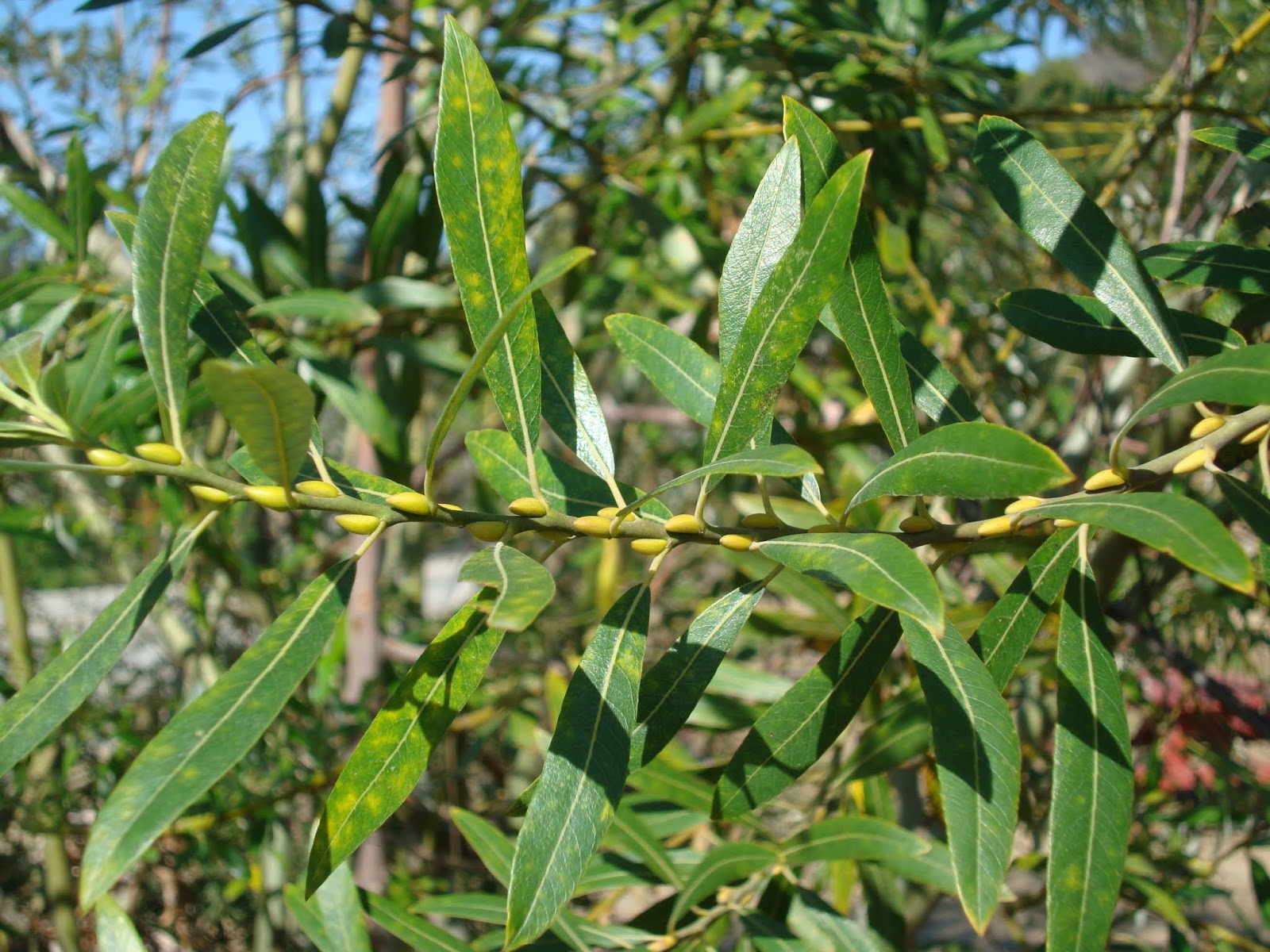
On Willow...


ON WILLOW


SPEAK TO US ON THE WAYS OF THE WILLOW

A lesson in learning how to learn


The wise man of the forest had been hailed by the people of the land, the eager pilgrims, to teach another lesson in the ways of nature. “Speak to us on the ways of the willow, oh kind sir,” asked one of the pilgrims. “The people are in great need, and it would benefit them greatly to learn the secrets of the prolific willow.”

The wise man listened intently, and told the pilgrim that he would teach the lesson on the morrow, and that the pilgrim should bring the families to the spot in the river where the willows grow around mid-day.

“Oh thank you kind sir,” said the pilgrim. “We shall be there, eager and ready to receive your lessons.”

On the following mid-day, the wise man was at the willows early, as the pilgrims began to trickle in.

It was a cool day as the pilgrims gathered around the riverbed area, near the tall and drooping willows.

“Oh, kind sir,” asked the elder pilgrim. “It is so chilly in this area. Perhaps we can build a small fire to warm up before you begin your talk?”

Without speaking, the wise man of the forest collected a long straight piece of dried willow. It was about as thick as a pencil, and about a foot and a half long. He took another dead and dried piece of willow branch, about as big around as his fist and maybe a foot long. As the pilgrims watched, the man of the forest first took his large knife and split the branch in half, and then further split the half so he had a flat rectangular piece of willow. All the pilgrims watched carefully as the wise man made a little triangular cut into the edge of the wood, and then he began to press the pencil-shaped piece of willow onto the flat piece. The wise man pressed hard, and begun to spin the willow drill onto the flat piece of willow, and soon smoke flowed from the friction. The wise man continued to spin thusly, and smoke poured out from the drilling. Soon, there was a red-hot ember in the dust that the wise man created.

The wise man quickly collected a bunch of dried willow bark from a dead branch, and scraped it with his knife to create a fluffy bunch of thin bark. He deftly placed the little ember into his nest of fluffy willow bark, and carefully blew on it until it puffed into a flame. He then placed it into a circle of stones, and added dry willow sticks so that the fire could grow and the pilgrims could warm themselves.

The wise man then began to collect his thoughts for his talk, when the leader of the pilgrims spoke up again.

“Kind sir, I don’t want to trouble you, but we have an elder here with pain in his legs. He cannot stand or sit comfortably on the floor. Is there something we can do for him?

The wise man nodded, and then proceeded to cut some of the dried and dead willow branches, those that were the straightest. He also peeled some long strands of the willow bark and put it to the side. First, the man of the woods created a square from the willows, and securely lashed the square. He then carefully measured, and then cut, willow branches that he then lashed to the square like legs, and the square because the seat of a chair. Taking a few more thick willow logs, he split them so they were flat, and secured these to the seat of the make-shift chair.

The wise man then helped the elder into the chair, cautioning him to sit carefully.

By now, the pilgrims had warmed some rice and vegetables on the fire, and one lamented to the wise man, “Too bad we didn’t bring forks and spoons.” The wise man whirled around back to the willows, and carefully trimmed pencil-thin twigs about 10 inches long. He passed several pairs of these to the pilgrim, saying only “chop sticks.” The pilgrims eagerly took these and began to eat their vegetables and rice.

By now, much time had passed and the sky was darkening.

As the wise man considered how to deliver his talk on the virtues of the willow, another pilgrim spoke up saying, “Kind sir, I have a terrible headache. Is there anything that I can do to help?”

The wise man nodded, and then carefully peeled off some fresh willow bark. He put the shredded green bark into a metal can, added water, and set it into the coals of the fire. After a few minutes, the wise man poured the tea-colored water into the pilgrim’s cup, and asked him to drink it. “The willow bark is nature’s aspirin,” he explained.

By now, the sky was darker, the children restless, and a cold wind began to pick up. The leader of the pilgrims looked about and decided they should depart for the day. As everyone was packing and getting ready to depart, he spoke up loudly for all to hear, saying, “We are all so thankful that the wise man of the woods came here to teach us about the wonderful willow, but we are very sorry that there was no time for him to teach us anything.”

The wise man tried to conceal his smile as he walked out of the canyon with the pilgrims.


Monday, June 18, 2018

The Wild Cherry


THE WILD CHERRY:
Native Americans processed and ate the pits
of this widespread and tasty summer fruit


Nyerges has been leading Wild Food Outings since 1974.  He is the author of Guide to Wild Foods and Useful Plants,  Foraging California, Extreme Simplicity, and other books. For a schedule of his classes, and information about his books, contact School of Self-Reliance, Box 41834, Eagle Rock, CA 90041, or on-line at www.SchoolofSelf-Reliance.com.

Wild cherry is a common, widespread plant throughout North America.  Where I live in Southern California, there are five native species of wild cherry found throughout the Pacific Coast region.  People are surprised because they do not think of this semi-desert area which rarely gets frosts as being able to support cherries. Yet, these varieties are well adapted to this climate, with deep roots, and thick -- almost waxy -- leaves so it can survive periods of drought.

Wild cherries are believed to be the most widespread wild shrub throughout all of  North America.  The Prunus genus not only includes all wild and domestic cherries, but also nectarines, peaches, plums, and almonds. 

One of the first historical accounts of the local indigenous people eating wild cherries comes to us from Father Junipero Serra, who passed through the San Gabriel Valley area of Southern California in July of 1769.  He noted that the local Indians (the “Gabrielinos”) used various fruits, grass seeds and other wild seeds, etc.

Most of the year, the evergreen cherry bushes or trees will resemble holly, and people will often guess that they are looking at holly bush.  I tell my students to take a leaf and crush it and wait a few seconds to get a whiff of that characteristic odor.  Most agree that the odor resembles bitter almond extract used in cakes.  In fact, this sweet odor is from the presence of hydrocyanic acid (“cyanide”).  This is why you do not make tea from the leaves.


If we are hiking around the cherries in late summer, there will invariably be fruit on the bush.  Some will be ripe enough for us to taste.  Most people can look at this fruit, and guess that it is edible. (However, I strongly urge you to never assume any wild berry or plant is edible simply because you subjectively think “it looks edible.”  That can be a quick way to get sick, or die.  Never eat any wild plant if  you haven’t positively identified it as an edible species.)  I typically will sample a wild cherry and let my students taste one before I tell them what it is.  The taste is not identical to commercial farm-grown cherries.  There isn’t quite as much sugar in the wild cherries, and they have a bitter underflavor and a tartness that makes them uniquely enjoyable, especially when you’re in the back country with meager food rations.  After a few bites, someone will guess that they are eating a cherry. 

In wet years, there is a thicker, sweeter layer of pulp around the large seed.  In dryer years, the pulp layer is thin -- even paper-thin in drought years. 

And though the Indian population certainly enjoyed the pulp of these cherries in the past, they considered the seed as the more important food source.  Seeds were saved, and their thin shells removed.  There is a solid pulp inside the pit, just the same as there is with the store-bought cherry pits.  When you chew on the pulp, you’ll find a pleasant combination of that almondy-bitterness and sweetness.  Though it might be OK to nibble on a few, these seeds were always shelled and leached if substantial amounts were going to be consumed. 

The process of removing the hydrocyanic acid is essentially the same as for acorns. You shell the seeds, and boil the pulp for about half an hour, changing the water a few times.  Generally, you will not need to process cherry seeds as long as acorns. In fact, three boilings of cherry seeds are sufficient to render them safe to eat (whereas, acorns might require a much longer leaching time). The final product is then ground into flour, and mixed into breads, pancakes, soups, or other mush-type dishes.  It is good, and is a sweet flour. 

Shelling cherry seeds

Vickie showing the whole seed in bag and shelled seed in bowl

3x boiled seed, ready to eat

The Cahuilla people of the desert in the vicinity of Palm Springs called this plant cha-mish, and today refer to it as a chokecherry.  They did not typically use the leached seed for breads, but almost exclusively for soups or mush.  Sometimes they made the meal into little cakes.  When dried, they were quite hard and black.  They could then be stored a long time, and would be reconstituted in water before eating.   One form of pemmican was also made by adding the fruit of these chokecherries with deer or elk meat. 

There is a great photo essay on making cherry seed atole (and other cherry seed foods) in “Ethnobotany Project: Contemporary Uses of Native Plants” by Ramirez and Small, and published by Blurb.com.

Dr. James Adams, co-author of “Healing with Medicinal Plants of the West,” adds applesauce to a cherry seed mush that he makes, and he reports that all his students enjoy it.

The inner bark of the wild cherries was also used for its medicinal value. A tea from the bark was used for diarrhea, stomach inflammations, and -- among the Cherokee -- the tea was said to help relieve the pain of labor during childbirth.  This medicine was also listed in the U.S. Pharmacopoeia in 1820 as a sedative. 


People of the 1800s and earlier would make syrup and soup from the cherries and use it as a medicine for whooping cough. The Miwok Indians of Northern California believed that eating the raw fruit was good for the voice. The bark of the cherries has been used extensively in cough medicines.  The use of cherry fruit or bark in cough medicines was not just for flavor.  But like with so many old fashioned medicinal remedies of the past, the modern counterparts that are now sold in stores are typically all sugar and artificial flavors.  Thus, horehound candy rarely has horehound in it, marshmallows have no marshmallow extract, and even the “cherry” cough medicines do not always have real cherry in it.  The price we have paid for our “advanced culture” is using more sugar, and concomitant health problems -- but that is another topic.

Due to the presence of anthocyanins in cherries, eating about 20 cherries provides the same anti-inflammatory effects as two aspirin, according to Alternatives.

Long, straight branches of the various wild cherries are often used for making archery bows, backrests, baby cradles, and various other crafts. 

The cherry is an attractive plant, somewhat conspicuous in the hillsides because of its somewhat shiny leaves.  The leaf shape of the common holly-leaf cherry (P. Ilicifolia) is very much like a camelia leaf, a simple ovate to round leaf with fine teeth along the margin.  In the spring, many white flowers develop, and as the summer progresses, you will see many small green cherries as they develop.  The fruits turn pink, then red, and then nearly black when they are ripe and at their best. 

Though great as a trail nibble, there are many recipes that you can make from the seeds’ pulp, and the deseeded fruit.  Uses for the fruit include jams and jellies, fruit pemmican, juices, and even ice cream. 

I recall taking a late August hike in the Angeles National Forest up a trail I’d never been on before.  There was no water along the four mile, uphill road that eventually led to one of the old, now-abandoned fire-lookout stations.  Though I foolishly neglected to bring along a canteen, I collected many of the ripe and very sweet wild cherries along the trail, and I ate them sparingly along the way.  I ate them sparingly, because if you consume a lot of the fruits raw, they can have a laxative effect.  I ate about three dozen fruits over the course of about three hours, and suffered no laxative results.

Keep in mind when you are collecting your wild cherries that bears enjoy this fruit also.  We’ve often observed abundant cherries in bear scat.  So be mindful and alert when you’re in wilderness areas during cherry season.


The seed readily sprouts, and I have occasionally kept the wild seeds which had particularly large or tasty fruits, and planted them in my yard or in pots.  I have several that sprouted and are now taller that I am, though I have not yet had fruit crops from these.      


Friday, June 08, 2018

"Guide to Wild Foods and Useful Plants"


WHY I WROTE MY BOOKS:

Guide to Wild Foods and Useful Plants


[Nyerges’ “Guide to Wild Foods” book, originally published in 1978, was published in full color as of 2014.  The book, now titled “Guide to Wild Foods and Useful Plants,” is available at bookstores, Amazon, and at www.SchoolofSelf-Reliance.com.  It has been adopted for use as a college textbook in one college.]


My earliest interest in wild food began around 1967 as I began my awareness of the the Native Americans who lived in Los Angeles County in the pre-Spanish era who gathered and hunted all their food.  I wanted to learn how to do that too, because I thought I would be a good survival skill, and mostly because I thought it was one of the most essential things a person could do, anywhere, at any time.


I studied all I could from the local library, and by enrolling in botany classes in high school and then college. I made the effort to study with whomever I could, when the opportunities arose: Native Americans, Amish, gardeners, botanists, bums -- whoever knew about plants and was willing to share their knowledge with me.


By 1974, I was asked to lead Wild Food Outings with the Los Angeles-based non-profit, WTI, whose focus was to educate in all aspects of survival. I fit in well, and not only led the walks (and continued to this day) but started work on a book about local wild foods.  It took the next four years of typing and researching and asking questions and compiling notes, but finally my stacks of seemingly-random notes were taking shape into a book.


My notes consisted of various piles of paperwork that I stacked around my bedroom, and which I finally began to order when I started a typesetting job at the Altadena Chronicle.  The editor, Sue Redman, allowed me to write a column each week which I called “The Emergency Plant Survival Guide,” which was eventually assembled into a photocopied 8 ½ x 11 format.   In many ways, I wrote the book for myself, as a way to assemble my own diverse notes and experiences about using plants for food, and other uses.


By then, I’d met and began studying with botanist Dr. Leonid Enari, who really opened my eyes to the vast botanical world “out there.” Dr. Enari – who I call the greatest botanist that no one knows -- was instrumental in shaping that very crude first edition of what we then called “A Southern California’s Guide to Wild Foods.”


The second edition, completely revised, came out within another two years or so, and then soon another revised edition with more plants being added each time.


At the time, there was no other book like this one which appealed to the common useful plants in the Southern California area.  There were a few academic books, though they didn’t appeal to the person who wanted to actually try these plants. And there was no internet then, so all my research was done in libraries or with first-person interviews, or spending all day to get somewhere just so I could learn one new fact about one plant.


The fourth edition was released in 1995, and in many ways this was my favorite version since all the plants drawings were painstakingly done in my own hand.  But today, everyone wants color photos. 


Finally, in the spring of 2014, the book was released in full color, which is perhaps the ultimate format we’d dreamed about in the mid-1970s when the idea for this book was formulated.


One of my greatest surprises came one morning while listening to the old American Indian hour on Pasadena City College Radio. Dorothy Poole, aka Chaparral Granny, was talking about the uses of certain local wild plants.  As I listened, it sounded vaguely familiar.  I quickly pulled out my copy of “Guide to Wild Foods” and opened to the plant she was talking about.  Imagine my surprise to see that she was reading directly from my book!  I felt honored that she felt my compilation and personal commentary was worthy of sharing on the American Indian hour.


The book helps the beginner understand the basic botanical terminology, and quickly shows the reader how to best utilize many of the common wild plants for food, medicine, soap, etc. 


Many of the plants listed in the book are not  native, and are considered invasive weeds. They are the plants that gardeners love to pull up and toss in the trash, or worse, to spray Roundup on them so they don’t come back.


It turns out that some of the wild foods are more nutritious than much of what we find in the supermarket. And they taste good too, if you simply take the time to learn how to prepare them.


In “Guide to Wild Foods,” you learn that the brown pod from the carob trees planted all over Southern California are edible, and are an excellent source of calcium and B vitamins.


You also learn that dandelion is the richest source of beta carotene (not carrots), and that purslane is the richest plant source of Omega 3 fatty acids, and that the common lambs quarter is like nature’s mineral tablet.


The book includes many of the Native American uses of plants, such as the yucca plant which was a valuble soap and fibre source, as well as three types of food. And you learn about many of the natural cures to poison oak, including the seemingly unusual treatment that I’ve done for the past 30 years.


Now titled “Guide to Wild Foods and Useful Plants,”  it is available at Amazon, at bookstores, and at www.SchoolofSelf-Reliance.com.


Friday, May 15, 2015

Book Review: Nuts and Berries of California


[Joe A. Hall showing the HIP section of book]

Christopher's latest book:

NUTS AND BERRIES OF CALIFORNIA: Tips and Recipes for Gatherers. A Falcon Field Guide by Christopher Nyerges, 2015.  [Available from Amazon, or the Store at www.SchoolofSelf-Reliance.com]

[Nyerges has been leading wild food identification classes since 1974.  Information about his classes and books is available from www.SchoolofSelf-Reliance.com.]

Last year, my “Foraging California” book was released, a full-color guide to the most common and widespread wild foods of California.

This month, a sequel to that book has been released, “Nuts and Berries of California,” another full color guide to just nuts and berries.  The foraging of nuts and berries has long been a family tradition, even by those who are just a bit too timid to collect wild greens or wild mushrooms. This is partly because there really aren’t that many toxic nuts or berries in North America, and the edible ones are fairly widespread and easy to
recognize.

Had my father lived to see this book, he would have loved it, and would have used it for one of his jokes, saying that I wrote about the “fruits and nuts” of Washington, or Hollywood. 

In my new book, I first discuss native nuts, then native berries, and then the introduced ornamental plants which produce edible nuts or berries.  I wrote the book with advice from Paul Campbell, author of “Survival Skills of Native California,” who kept giving me suggestions about what to include in the book. I used many of Campbell’s suggestions in the book, but not all. Some of his suggestions of nuts or berries to include were marginal foods, or were rare, or were found only in very localized areas.  So when I outlined my book, I included those plants which had the broadest distribution, and which were relatively easy to identify.

The wild nuts include the acorn, which every child can recognize, and which every Indian tribe in California once used in their daily diet.  Wild walnuts are included, and when most people think of wild nuts, they think of walnuts.

Bay, pine, chinquapin, jojoba, and mesquite are all included in the native nut section. There is unique information about how to process the California buckeye nuts, which were widely used by the Pomo people for food. Dr. James Adams of USC shared some of the latest information about buckeyes toxins and how they can be removed before eating the seeds.

All the common wild berries are included, such as blackberries and its many kin, wild cherries, elderberries, strawberries, grapes, manzanita, rose hips, toyon and many others.

The last section is called HIP, a term coined by my wife Helen, meaning horticulturally introduced plants.  These are plants that were brought here from somewhere else for ornamental purposes and can now be found surviving in the wild as well as in the urban landscape. There are many HIP plants, but I only include some of the most common, like figs, loquat, mulberries, olives, and pyracantha.

The book is beautifully illustrated with color photos and contains many recipes for how to use these nuts and berries.

When I was first introduced to the world of ethno-botany many decades ago, it appealed to me on a deep subconscious level. Food is every where, not just on farms!  The native peoples from around the world actually ate, and often ate well, and this is at least partly because they had no other choice.

There was a mystery surrounding this field when I was first learning about it in the late 1960s.  Though there were books on the subjects, many of the authors obviously wrote about it in a very detached second-hand nature, like talking about something that doesn’t exist anymore. I saw the very pragmatic aspects of learning about the uses of plants, and I realized that so many of the food-related fears which mankind suffers are not necessary, assuming we educate ourselves and live in accord with the natural world. Yes, there is a trend in that direction, slow but sure…

My involvement with wild foods has included sampling everything that I learn about, and including many in my regular diet. I have also written about how these plants are used in books, and teaching classes. I led my first wild food outing in 1974, and published my first book, “Guide to Wild Foods,” in 1978.   Nearly every one of my books since then has included some information about wild foods and wild plant uses.