Thursday, August 30, 2018

"Field of Dreams" -- in Highland Park

Excerpt from Christopher's "Squatter in Los Angeles" book -- available from Kindle, or from the Store at www.SchoolofSelf-reliance.com.  The best $3 you'll ever spend!

"Field of Dreams" -- in Highland Park


I think I was just a natural dreamer and I believed that I could magically earn a very sufficient income by freelance writing and teaching, so this period of squatting gave me the luxuries to choose my life’s activities.


I continued to write newspaper columns, though I never earned much from them. I  began to work more actively on my first book about the uses of local wild plants. I continued to engage in metaphysical studies, and gardening, and conducting occasional wild food outings.


My garden never seemed highly productive but  I had a few of the tall red amaranth plants, some squash, a corn patch, some greens, and wild foods. It was probably my first successful corn patch. I didn’t plant the rows of corn that you see so often in gardens and on farms. Rather, in my approximately 10 by 20 foot corn patch, I had corn more of less evenly spaced.  I had wanted to try the so-called Three Sisters of the native Southwest, of corn, beans, and squash.


In the arid soil of the Southwest, the corn was planted first, and once it  arose, beans were planted at the base of the each corn. The beans’ roots fix nitrogen and this acts as a fertilizer to the corn. Squash was then planted as a sprawling ground cover to retain the valuable scant moisture of the desert.


I planted my corn in my wood chip patch, three seeds per hole about two feet apart.  Corn came up, and then I planted bean seeds.  Beans are usually an easy crop to grow, but not that many came up. Who knows, maybe the ducks ate them. I planted squash too. Not a desert squash but ordinary zucchini which did a good job as a ground cover and food producer. I loved the little garden, and at night when I sat at my plywood desk with my typewriter, I’d look out my window through the several feet tall corn patch to see the lights of the city below.  During the day, little birds would flock to the corn patch and eat bugs. I enjoyed the fact that this little garden that I created with my simple efforts was now teeming with wildlife.  It felt good just to look at it. It provided food for my body, food for wildlife, and food for my soul.


Not long after I started this patch – it was near Thanksgiving – David Ashley came by for a visit.  David had already moved into the neighborhood from wherever else he’d been living. He came up to the top of the hill where I was an illegal squatter. My housing status didn’t cause David to lower his regard for me.


I took David out into my garden, and we stood there talking about life. I pulled off a ripe ear of corn and handed it to him and picked one for myself.


“What’s this?” asked David.


“To eat,” I responded as I began to peel off the leaves and hairs on my average size ear of corn.  He took a bite of the sweet kernels.


“I didn’t know you could eat corn raw,” said David in a surprised voice.


“Yep, you can,” I told him as I chewed on my sweet cob.  David began to peel his and take some bites.


“Wow, that’s really good!” said David, chewing on more kernels. We stood there for a few moments, eating our corn, looking at the outside world through the stalks of corn that were taller than us. It was a quiet, special moment.


Eventually, David left, and over the ensuing months, I would occasionally hear David telling someone about his surreal experience eating raw corn in Christopher’s little corn patch, our own little “field of dreams.”

Sunday, August 26, 2018

On Urban Sustainability .... a beginning


To Create a Sustainable City, we must Re-Engineer our Thinking


Growing up in a suburb of Los Angeles, I did not have an immediate knowledge of where our food and water came from.  I turned on the faucet for water, plugged cords into the wall for electricity, and went to the store for food. Yes, my city had been engineered for me, and I was just mindlessly playing my role.


At a young age, I felt that there was something wrong with my ignorance. Even worse, no one else seemed to be aware of our unawareness.  Everything came from somewhere else.  One salvation for me was that my mother grew up on a farm, and would tell tales of the Great Depression and the Dust Bowl where many people had no food, and some starved to death. My mother’s family were poor by most standards, but they had 51 acres in rural Ohio and they fed themselves and many others. My mother’s stories inspired me to become an ethno-botanist, and to learn about how all plants were used in the past. 


Though I did not pursue the path of “urban planning,” I realized that I had many choices within the framework of my suburban life where I could ecologically engineer my life.


PERSONAL CHOICES

My first teenage forays were into backyard urban gardening and raising chickens in a tiny space.  I didn’t want to be dependent on commercial fertilizers and bug-sprays, so I learned the ages-old methods of agricultural, methods that people today call “organic” or “perma-culture.”  I learned that anyone could indeed produce at least some of their food in the least amount of space. 


Even in my late teenage years, I had critics who told me it was not practical to grow foods without artificial fertilizers and pesticides.  Really?  I followed the path of Fusuoka and his “One Straw Revolution,” and the Rodale family, and insisted on growing everything with nothing artificial. I learned to keep down the bug population with natural methods that had been practiced world-wide for millennia.  I knew that the so-called Green Revolution, based as it was on petroleum-based fertilizers and pesticides was partly a fraud, and was not sustainable into the future centuries.


I continued my botanical studies by learning about the uses of wild plants of the Native Americans. I found to my surprise that all the foods used by the indigenous population could still be found throughout my homeland, though it was necessary to hunt a bit more because of all the houses, roads, and modern landscaping that has taken over the land.  Yes, the engineering of the concrete city has destroyed much of the territory for these native foods, but they were not entirely gone.


 I began to eat these wild plants that had sustained people for millennia, and I incorporated them into my regular diet.  When I first began to share with others my excitement of these floral treasures, I  was treated with mostly apathy, sometimes scorn, and even pity.  I was amazed! 


RE-ENGINEERING MY OWN MIND

In the mid-1970s in Los Angeles County,  I began publicly teaching and writing about the practical skills of self-reliance and practical survival in the city.  I was not engineering the city, but I was working to engineer a new mindset that says we can live ecologically (and economically) in the city.


Today, there is a renaissance and a great interest in the knowledge of our ancestors.  And it’s never too late to begin to seek our roots, and to turn around some of habits of ecological suicide.  I believe that we can solve many of our problems today by looking to the past for some of our solutions.


Here in Southern California, we have barely gotten over a four-year drought, which has finally inspired politicians and water department movers-and-shakers to encourage the millions of people who live here to consume less water.  With water usage averaging about 131 gallons a day for Los Angeles residents, and an ever-growing population of about 5% a year, water must always be a concern, as it will always be for most major cities of the world. 


The mayor of Los Angeles, and water department officials, are encouraging people to tear out their lawns and install drought-tolerant plantings.  I encourage people to go even one step further. Actually, a few steps further.  Yes, learn about the wild plants which are edible and medicinal, and encourage them. They will grow without your care.  And never merely plant “ornamentals,” that is, plants who do not provide food, or medicine, or good mulch from their leaves.  Plant with a purpose to feed your body  and your soul. 


To help irrigate these useful plants, I’m a big proponent of simple grey-water recycling, where your sink and washing machine water are piped into your backyard garden or front yard orchard.  Not every single city dweller can do this, but enough can do it to make a large difference.  Yes, certain changes are essential, such as buying soaps that contain to dyes, colors, or harmful chemicals. Continuing education is a big part of self-reliance and sustainability.  Recycling your grey-water means that you are getting at least two uses from water which previously you used only once.  Practically speaking, for every gallon of water you recycle, you have effective created another gallon of water for your use which does not have to be imported from somewhere else!


With the population of Southern California that continually grows, there is the growing need for more food and more water, as a function of increased population.  This unfortunately means even more land paved over for more houses or apartments.  Thus, the very soil which all ancient civilizations knew was the foundation of a healthy society becomes more and more rare. This should not be the case, even though it seems all but inevitable.


Our very lifeblood is dependent on the soil in so many ways.  Water, food, everything.

However, urban people need to re-learn these very basic ecological principles.  Our very laws, and attitudes – especially in the more-“developed” countries -- work against our long-term sustainability.


URBAN SUSTAINABILITY

Here in Southern California, the green lawn is still the norm in the sprawling suburban flatlands.  Never-ending flows of water (from somewhere) is the expectation.  The mindset must turn around, and it will begin with enlightened individuals who see that inappropriate lifestyles in an over-populated dry terrain are the antithesis of survival. As attitudes change – and slowly they are – the laws of the land need to support the water-wise practices that support sustainability. 


As a lifelong-educator in the uses of common wild plants, I cringe when I see television advertisements for such products as Roundup, and others, designed to kill off the unwanted vegetation of urban gardens and landscapes.  You know, such plants as dandelions and other healthful herbs called “weeds” which they picture in their ads.


To me, a student of the wild plants and the things growing in the faraway and neglected places, using a chemical like Roundup to “clean up” a wild area is a sacriledge.  Further,  bankers and land investors do not necessarily see the land as a source of life, recreation, fulfillment, and community. Rather, increasingly, the desire is to extract the greatest financial benefit from the land. Land that has nothing built upon it is all too often described as “non-performing real estate.”  That is the mentality which has caused the urban sprawl to sprawl even further, while diminishing the very sustainability from the land that we all need.  “Engineering” the city should not be simply building ever-more structures on the diminishing landscape. We should be re-engineering our thinking so we can get more from less, in ways that are both healthful and ecological. 


THE QUIET REVOLUTION

I am a pioneer of the path of the green and sustainable revolution.  You won’t find me protesting in the streets for changes, but you might find me in a city council meeting, or in a garden, or in a wilderness area.  I work with people one at a time. I have found that once an individual sees that the so-called weeds in an empty field are actually great nutritious food or medicine, they suddenly take a very personal interest in protecting and caretaking the land. Once individuals learn that the water from their very households can water their own garden and herb-patch, they become quite alert and aware of the quality of any soaps they are using, and they begin to use only those that are biodegradable, as a result of enlightened self-interest.  Suddenly, living an ecological urban life becomes very personal.


There are many paths to urban sustainability. This is the path I have chosen.

Christopher Nyerges works to engineer a new mindset that says we can live ecologically (and economically) in the city. He has taught self-reliance and sustainability his entire life through the teaching of ethnobotany and principles of permaculture. Nyerges is the author of 23 books including “Self-Sufficient Home: Going Green and Saving Money,” “Extreme Simplicity: Homesteading in the City,” “How to Survive Anywhere,” and others. He is the co-founder of the School of Self-Reliance, and works actively with various non-profits for the goals of urban sustainability.


Monday, August 20, 2018

How Eric Sloane Influenced my Work


Lessons for Artists from Eric Sloane


[Nyerges is the author of “Guide to Wild Foods,” and nearly two dozen other books.  He also teaches writing, self-reliance skills, and ethnobotany. He can be reached at www.SchoolofSelf-Reliance.com]

Eric Sloane is one of my favorite artists.  His work is primarily line-drawings, and he’s authored such books as “A Reverence for Wood,” “Eric Sloane’s Weather Book,” “Our Vanishing Landscape,” and “Age of Barns.”  And many others.


Sloane is also a thinker and philosopher, not merely sharing old timey things for their antique value, but constantly trying to share that there was a living character of self-reliance that we have all but lost due to our penchant for modern devices and letting other people do our work for us.

As a would-be artist, I have used Sloane’s images to practice my line art.  I figured, I’m not trying to become another Sloane, but if I could get my level of artistry closer to his, my skill will have increased.  I am still no where close to that level, probably because I simply don’t practice as much as necessary to become a master.

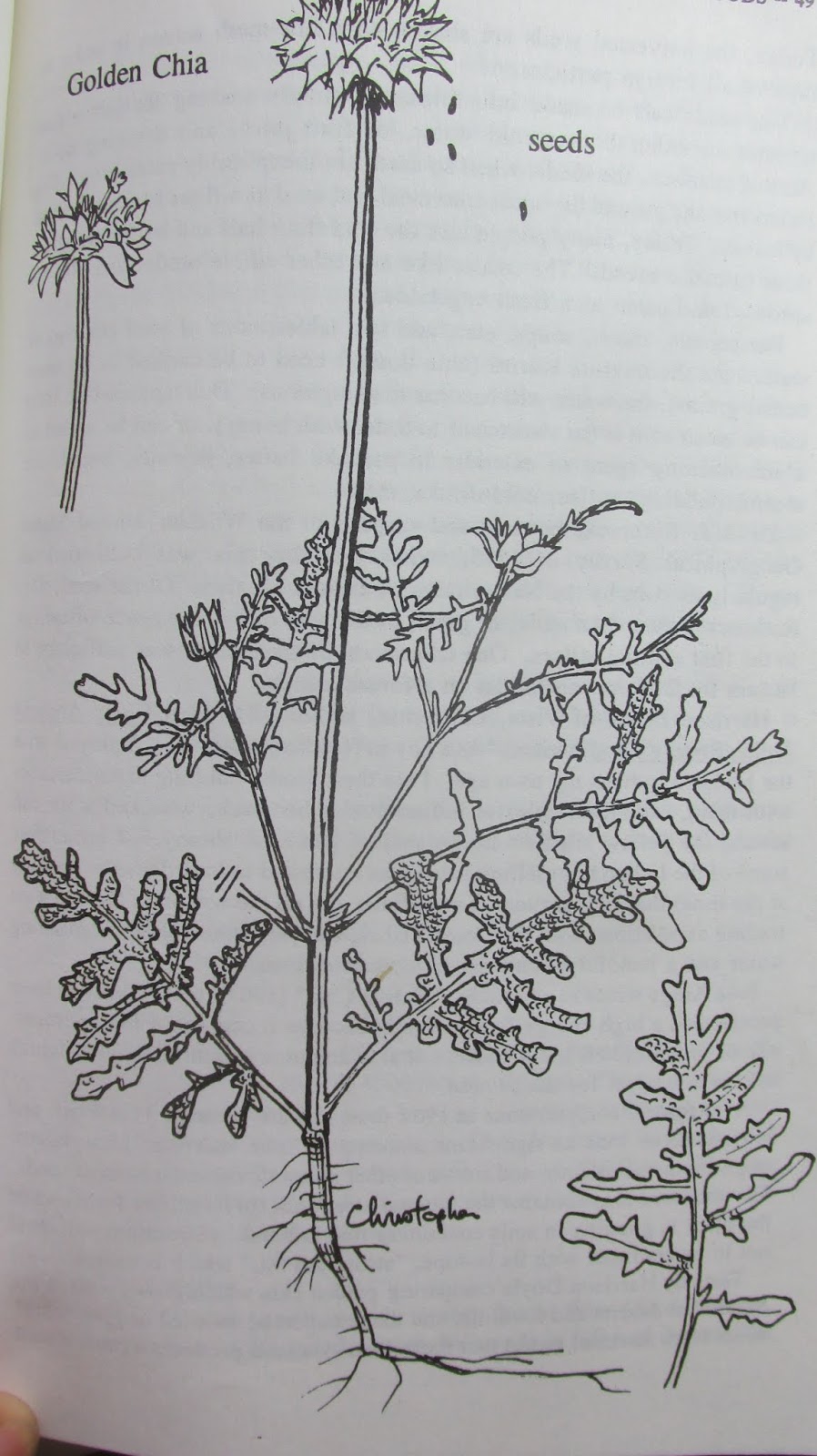
My very first book was “Guide to Wild Foods,” which took me more or less 4 years to write and then another year for the artist to illustrate it.  I knew that my skill was insufficient for that early book, but 10 years later by the time it was revised and revised, I undertook to draw the plant images for that fourth edition.

Though I have had scant few art lessons, I learned from Sloane that drawing is not so much about the technicalities of drawing, as it is about seeing.  As I drew each plant for my revised book, I had collected a sample of that plant which I set before me.  I would move the leaves and stems this way and that, in order to show all the significant parts of the plant that would help in identification.

Then I would begin the hours-long process of penciling each plant, where I was able to show  both the character of the plant, as well as the essential details.

Once I was happy with the pencil drawing, I went over it in black ink, and these nearly 70 images became the latest book. 


I have always liked that version of the book the best, because not only did I entirely produce the book – from typesetting to layout to printer – but it’s my personal art gallery, which contains much of my work in one place.  I would have been proud to give a copy to Eric Sloane should I have ever met the artist.

But as technology improved and prices for color printing dropped, no one really cared for a botanical book with simple black and white drawings. “Guide to Wild Foods” is currently published in full color by Chicago Review Press, and sells more widely than my line-drawing version ever did. 

I began to think about the artist’s eternal conflict after reading Eric Sloane’s “Legacy” book.  The conflict is how to retain your impeccability as a true artist, and how to reconcile that with the business world and the need to stay solvent financially.   It was a good business decision for me to turn my “Guide to Wild Foods” book into an all-color book, because far more people are learning about ethnobotany from it now.  Still, it makes me happy to see that my all-line drawing 1995 version can still be occasionally found on Amazon and ebay for the collector who likes folk art.


Though I have always purchased Sloane’s books for the art first, and the writing second, I want to share some of his ideas about writing.

In his chapter “The Adventure of Writing” in “Legacy,” he writes, “Writing is an apparatus for the conveyance of thoughts. Some writers write because they have something to say; others write just because they want to say something. The writer who writes for the purpose of making money should forget it; there are easier ways to make a living. When you chase money, it becomes elusive, but when you ignore it for the love of hard work, money seeks you out like a neglected lover: Payments will come in from stuff you had even forgotten about. Writing shouldn’t be a commercial occupation, because it is a religion and a calling that should never be treated sacrilegiously.”

That’s quite a sentiment, though I doubt those who write (anonymously) copy for web site and advertisement and city brochures will lose sleep over the fact that they are writing for their income, as factotums.  Even I have done plenty of writing such as ghost writing, editing, brochure writing, and web-content where you’d never know it was me doing it. It was honest work that paid the bills.

Still, I think every beginning writing student, whether journalists or those seeking literary careers, should read and study Sloane.

Among his other advice to writers, from his long life of experiences, Sloane adds “Writing to compete (like writing to make money) is both bad manners and bad thinking:  Being yourself and enjoying your writing is paramount.  Nowadays competition is the major philosophy of business, the backbone of the national economy, and the essence of sports.  Competition is the spark of the American way.  Yet, no doctor, inventor, painter, or writer ever reached greatness by means of competition.  The only person that any kind of artist should compete with should be him or herself.  Always trying to do better work used to be the rule of old-time writers, but that was when there was such a thing as indecency and four-letter words were considered crude or rude…. Writing has become a competitive industry instead of an art and a way of life.”

Sloane is forever the idealist, and for better or worse, he lived what he believed.

Again, students of journalism, English, and literature should all be required to read, study, and discuss the Sloane doctrine.

He concludes, “A writer is not someone who writes as much as someone who thinks, and the writer’s prime reason for being is to help others think.  Teaching people to think is the highest calling of civilization.”


Sunday, August 19, 2018

Old School Knife Sharpening: Meet Julio Toruno


OLD SCHOOL KNIFE SHARPENING

MEET PERIPATETIC KNIFE SHARPENER JULIO TORUNO


[Nyerges is the manager of the Old L.A. Farmers Market every Tuesday in Highland Park, at Ave. 58 and Figueroa.  For information about Nyerges’ classes and books, he can be reached at www.SchoolofSelf-Reliance.com.]

Julio Toruno is intimately involved with knives everyday.  But he’s not a survivalist, a knife collector, nor a cutlery dealer.  He doesn’t live in a remote compound, and he’s never heard of all the TV survivor actors.  Toruno is a quiet man who’s found his peace through the art of knife-sharpening.

Many times a week, including Tuesdays at the Highland Park Farmers Market, he sets up temporary shop from the back of his truck.  He’s a peripatetic knife sharpener; “have stone, will sharpen,” seems to be his motto.


Toruno got started with knife-sharpening because of his background in cooking.  He’s worked as a prep cook, and as a cook at a private school.  He knew that a sharp knife was a necessity in getting the job done.

For the last four years, Toruno has been a peripatetic knife-sharpener, driving to various locations where he sets up shop and does his trade. 

When I recently approached him as he was sharpening a large kitchen knife, I could see that he was very focused, and I didn’t know at the time that he was counting his strokes.  His concentration was completely on each strokes of the knife on his wet stone. I watched him evenly stroke the knife back and forth, and occasionally put some water onto the stone.  I waited until he finished, after he wiped the knife clean, and set it to the side, before I began to ask questions.

The stones are mounted in a vice that Toruno made, which allows the stone to sit atop a large stainless steel rectangular pan filled with water.  This makes a very neat system, so that the water he continually adds to the stone drips right into the pan.

I gave Toruno one of my carbon steel sheath knives so I could watch the process from start to finish.  He mounted the coarsest wet stone onto his vice, which had a grit of 120. (The smaller the number, the coarser the grit of the stone). He tells me that he first examines my knife to see how many strokes it needs, and to see if there are any particularly bad spots on the knife. He decides to take my little Russel skinning knife through his five stages of sharpening.  He lays the knife onto the wet stone, matching the angle the cutting edge to the stone. He then gives it about 70 even strokes. “The number of strokes changes as I move from stone to stone, and depending on the knife,” he explains. “The further along the process, I use less strokes, but on average it’s about 160 strokes total per side, from the coarse to the fine stone.”


When he was done with the 120 grit stone, he moved to finer grits of stones.  He proceeded to stroke my knife with a 220 grit stone, then 320, then 1000, and finally the finest work was done on an 8000 grit stone. 

Toruno looked at my knife’s edge carefully, and sliced through a piece of glossy paper to show how sharp he’d made it.

For a beginner just getting started in knife-sharpening, he suggests going to any woodworking store and buying a stone with a different grit on each side, such as a 500 and 1000 grit stone. 

Locally, Toruno can be seen Tuesdays at the Highland Park Farmers market at Avenue 58 at Figueroa, and at the Altadena Farmers Market at Loma Alta and Lincoln.

Tuesday, August 14, 2018

Antigua of Highland Park: Doing Little Things to Help the Environment


ANTIGUA COFFEE SHOP of Highland Park:

DOING LITTLE THINGS TO HELP THE ENVIRONMENT


[Nyerges is the manager of the Old L.A. Farmers Market, every Tuesday from 3 to 8 p.m. at Ave. 58 and Figueroa. He is the author of “Self-Sufficient Home,” “Extreme Simplicity,” and other books. He can be reached at www.SchoolofSelf-Reliance.com.]


As I was walking from the Old L.A. Farmers Market to get my usual cup of coffee-chocolate at Antigua’s, I noticed a new flower bed in the back of the coffee house.  Where there was once trash and dead weeds, now there was now a beautiful wood-framed garden bed with colorful flowers and even some vegetables.  But there was something different about this approximately 6 by 6 foot garden space. There was a wooden pole sticking out of the middle, and a plastic bucket was strapped to the pole with some sort of tubing leading to the roof.

I went inside to talk with the owners, Dennis and Miguel Hernandez. The Hernandez brothers were both born in Guatemala City, Guatemala, so they named their coffee house after their home town. (Antigua is the name of the “old” Guatemala City.)  They both moved to Los Angeles in 1999 as teens, moving to the U.S. with their father. They both worked at similar jobs, including food industry jobs which got them interested in starting their own coffeehouse.

After lots of work, they started Antigua at 5703 N. Figueroa in September of 2007.

I saw Dennis and asked him to explain the unique garden out back.

“Oh, you need to talk to Miguel,” he told me with a big smile. “It was Miguel’s and his daughter’s idea.”

So the next day, I met with  brother Miguel, and we discussed the ecological garden.

Miguel told me that he had wanted to do something with a little bit of space in the rear of the coffeehouse, a somewhat ugly little spot where trash would accumulate.  So, with encouragement and help from his teenage daughter Kathy,  he built the little sturdy-framed garden out back.


RECYCLING COFFEE GROUNDS

“You know we throw a lot of coffee grounds away, right?” Miguel asked me. “Well, we filled that little raised bed garden with lots of our coffee grounds.  It’s a really good way to recycle the grounds.”  Miguel pointed out that they still end up tossing some used coffee grounds away, because they use so much.  They do give some away to gardeners and mushroom growers, and they plan to continually find a home for their used grounds.


SAVING WATER FROM THE AIR CONDITIONING

“But what’s that plastic bucket up on the post?” I asked Miguel.  He broadly smiled and he told me that he realized the air conditioning for Antigua constantly drips out water.  “I ran a tube from the AC to that bucket, and the water from the bucket drips down and waters the garden.  Why not put that water to use?,” he asked.  


Miguel wasn’t sure if the AC condensation would be sufficient to water the garden, but to his surprise, he found that the water from Antigua’s AC system filled the five gallon jug at least three times a day, and up to five times during hot weather.  “There is so much water coming off the AC,” explained Miguel, “that I run the tube to fill those overflow bottles, and I actually take water home for irrigation.”

SETTING AN EXAMPLE

The little garden also has a little   solar lamp, and a bird bath for the birds.  It’s a great example of what anyone – even in the urban environment – can do to help save and recycle resources.

The Hernandez brothers also recycle as many of their used cans as possible, in which they receive certain food items. And during very hot weather, they put out a jug of water and cups on the front entrance for passers-by to get a drink.  “A lot of people, even homeless, really need a drink and sometimes they are a bit too embarrassed to just ask for water,” explains Miguel. They also put out a water dish for dogs.

“We’re just trying to do the right thing to give back to the community,” explains Miguel. “And if we do this, maybe others will do so also, and we’ll all make a difference to our community.”

UPDATE


Water dripping from air conditioners: Is it sanitary?


Answers to your questions about the news.

July 15 2013 3:02 PM


Ever wonder about the water that drips down from air conditioners as an unwelcome sidewalk surprise when you’re walking to work? In 2011, Forrest Wickman looked into the reason why ACs are so leaky, and if there’s anything unsanitary about the water that’s dripping down on you. The original article is reprinted below.

· 

Air conditioner water: Is it good enough to drink?

Walk down any city sidewalk on a hot summer day, and you're bound to get wet—and not just when it's raining. Water drips from window AC units, especially on muggy days, and this unpleasant drizzle can fall into your hair or even onto the lip of your morning coffee cup. Is all that dripping water sanitary?

Yes, as a general rule. Most of the dripping from air conditioners is just condensed water vapor that comes from the air inside the building. Window air conditioners are designed to drain this water from the back, raining it down on any unsuspecting pedestrians below. In most ways this water is exactly like rain (which also forms from condensed water vapor) or the moisture that collects on a cool can of soda, and it's typically no more harmful. However, in rare cases small amounts of water can be left to stagnate inside the air conditioner, making it a breeding ground for bacteria.

On a hot and humid day, a window unit can drip up to 2 gallons of water, which accumulates on its evaporator coil as it cools and dehumidifies the air. (Very little condensation gathers on the exterior side of an AC, which tends to be warmer than the air around it.) This coil, like many plumbing pipes used for drinking water, is made of copper (which is also what makes air conditioners so heavy), and it's much cleaner than you might expect from looking at a dusty AC filter. While copper can be unhealthy in high doses, the condensate from air conditioners seems to be low in minerals and dissolved solids.

In a properly functioning air conditioner, the water drips down from the coil into a condensate pan and then exits the unit through a drain or tube. However, a clog in this drain or tube can leave a puddle to accumulate inside, which is an ideal environment for many types of harmful bacteria. In particular, a 1976 outbreak of Legionnaires' disease was caused by bacteria that spread out of the air conditioning system at Philadelphia's Bellevue-Stratford Hotel. (That's how the disease got its name: Many of the victims were attending an American Legion convention.) While Legionella is known to thrive in the cooling towers of large air conditioning systems like the one at that Philadelphia hotel, it does not seem to grow in smaller units. Furthermore, dripping water isn't really stagnant, so it's extremely unlikely that the water raining down on pedestrians would be infected.

The water that drips from air conditioners is probably even safe for drinking. (It's certainly more potable than the drinking water in many countries.) Still, for the reasons mentioned above, it's best not to tilt your head back for a draft. If you're looking for a better use for your air conditioner's condensate, the Explainer recommends using it to water your plants.

Got a question about today's news? Ask the Explainer.

Explainer thanks Douglas T. Reindl of the University of Wisconsin-Madison and Mark Sobsey of the University of North Carolina at Chapel Hill.

Friday, July 20, 2018

"The Winds Erase Your Footprints" --Life on the Reservation during the Depression


THE WINDS ERASE YOUR FOOTPRINTS

A book by Shiyowin Miller


One of the books that came out of my family was “The Winds Erase Your Footprints,” written by my wife Dolores’ mother, Shiyowin Miller.  Shiyowin, who was part Osage, was immersed in Native American culture. I remember visiting her home in Temple City, which seemed like an Indian museum with a full library, drums, pots, and artifacts from all over the country.  

Shiyowin had been a music and dance teacher, and was a professional dancer. She knew Iron Eyes Cody, and worked with Luther Standing Bear, a Lakota Sioux who wrote “My People the Sioux” and other books. Luther Standing Bear adopted Shiyowin, and let Shiyowin act as his agent for his various books and other legal matters. It brought the past alive to me when I was able to see and feel the pipes, sandals, robe, and other materials that Standing Bear had given to Shiyowin. (After Shiyowin’s death, I donated most of Standing Bear’s personal possessions to the Crazy Horse Museum in South Dakota).


Shiyowin also had many friends from the Navajo lands. In the 1930’s, Shiyowin’s best friend, Juanita, fell in love with a Navajo man, Luciano, who’d been working as an extra in Hollywood.  Juanita and Luciano got married, and moved back to Luciano’s Navajo lands in New Mexico.

Shiyowin kept in touch with Juanita, and wrote about the experiences that Luciano and Juanita underwent on the reservation, during the Depression when there was so little work.


Shiyowin edited and revised and rewrote her book many times over the next 30 years, and she died in 1983 before it was ever published.  I married Shiyowin’s daughter Dolores in 1986, and when I saw the box with hundreds of pages of manuscript, I asked Dolores if I could read it.  In fact, Shiyowin had hired Dolores to type many of the revisions over the years, and so Dolores was familiar with the content.


Once I started reading it, I couldn’t put it down. It was amazed at the quality and depth of the story, and could barely believe that it had never been published. Shiyowin had actually received an advance from a publisher some 20 years earlier, but since she kept rewriting and revising, it never got published.  


Shiyowin Miller, who had been adopted by Luther Standing Bear (author of "My People the Sioux" and other books) interviewed her best friend to write this true story of the harsh life in the Navajo lands during the 1930s. It's a wonderfully-told story, written mostly during the 1950s and ‘60s. Shiyowin died in 1983, and when Shiyo’s daughter, Dolores (my wife) showed me the manuscript in the late 1990s, I was amazed at the quality and depth of the story, and could barely believe it had not been published. To me, it was like reading a Tony Hillerman novel, except it was true!


Everyone said that the book accurately depicted life on the Rez during that time, mixed in with some accounts of Navajo witchcraft.  With some editing, Dolores and I got the book published in 2002 by Naturegraph Press, which features many Native American titles.  If you do an internet search with the book's title, you'll see some of the reviews that have been published about this book. 


The story was descriptive, compelling, and you feel as if you are re-experiencing the harsh winds, the life in the Hogan making coffee, the search for work, and all the ceremonies and gatherings that were a part of the Navajo way of life.  The books, which was 335 pages when published, also contained hints and clues in the backdrop about Navajo witchcraft, and the ma-itso, the wolf clan which was feared by most.


The freak death of Luciano was generally attributed to the work of the ma-itso, and Shiyowin gives the clues in bits and pieces, in the way that Tony Hillerman so masterfully slowly revealed his mysteries.


The following excerpts from THE WINDS ERASE YOUR FOOTPRINTS.


From chapter 3: Pentz's Trading Post


Juanita stood, head forward, her hair long and black in the sunlight; she shook it, the drops of water flying. She ran her fingers through it, the pale, yellow shreds of fiber falling lightly to the ground. Luciano was washing his head now, in water that his mother had prepared. Juanita began to comb her hair carefully, the comb snagging and tangling in the still-wet strands. She stopped and disentangled the combings, rolling them into a little ball. The wind caught it and tumbled it over and over across the ground.


"Ah-yeeee!" Shimah exclaimed and went running after the ball of combings. She brought it back and placed it carefully in the fire, watching as the flames consumed it, talking rapidly to her son. I am guilty of some small breach of custom, Juanita thought, and then was surprised at the gravity of her husbands' face. He sat back on his heels, his hair dripping unheeded.


"You must always burn your combings," he told her seriously.


"My mother says never to let any of your hair escape like that."


"I'm sorry, Lu," she began. "It was a bit untidy. But out here in the open I thought the wind would carry it away."


"That's it: the wind might . . ." He stopped abruptly.


Juanita was puzzled. It was such a little thing for him to get upset about, and she had said she was

sorry. "Is there some tabu connected with hair-combings?" she asked gently, trying to smooth the

troubled look from his face. "If I knew it I'd observe it--you know I would." Shimah stood by gauging the conversation by their voice tones. Luciano was still disturbed. "It isn't exactly a tabu, but just don't be careless." It wasn't like her husband to speak so. He'd always been patient about explaining even small things. She turned away to hide the hurt.


Shimah plucked at her sleeve, speaking gently, soothingly, as though to erase the hurt, the alarm.


"Tell my daughter-in-law to give me her jewelry so that I can put it into the soaproot suds. That will be good for the silver and the turquoise."


Juanita resolved not to mention the incident of the hair-combing again. Lu was moody, preoccupied with looking for a job. It wasn't anything important, only puzzling, and it wasn't worth a misunderstanding if she never found out. There was so much she didn't know, it would take forever to explain in detail everything she asked.       


From Chapter 5: Wild Duck Dinner


Wounded Head greeted them with warm words, but his face remained impassive--cold. His son

extended his hand for a limp handclasp. Juanita and Luciano were given a comfortable place to sit at the back of the hoghan, but Juanita wasn't comfortable. She was conscious of her hair being disheveled from the race up the canyon; she tried to smooth it, putting one hand to her head unobtrusively. She wished that she had worn a skirt instead of Levis. Somehow she could feel Wounded Head's disapproval without seeing his face.


Luciano was talking to the two men. No, he hadn't as yet gone to work in Albuquerque.


Wounded Head placed his fingertips together with elaborate care. Was it true that in that Western

place, where Luciano had been, there was great opportunity for ambitious young Navajo men?


Luciano misunderstood. Was his son planning to go there?


A thin ghost-like smile passed over Wounded Head's face and was gone. He shook his head.


The stew was ladled into bowls and passed to them. Juanita cooled one of the pieces of meat on her spoon. That didn't look like mutton. She bit into it. Beef! Wounded Head and his family did eat well. Her husband had placed his hat on the bedroll behind him, and now his dark head was bent over the bowl of stew attentively. He looked up long enough to direct a sidelong glance at her when their host got up, took a can of peaches from the cupboard, and opened it with his knife.


The meal finished, they sat back looking into the fire, the men talking leisurely of unimportant things. Wounded Head's wife asked a few questions of Juanita, through Luciano: did she like it here . . . did she miss her own people?


It was a foolish thing, her imagination was overactive, Juanita told herself, but she wanted to get away. The fire was bright, warming; Wounded Head's wife was pleasant; Wounded Head himself seemed almost friendly as he drew Lu into conversation; but it was a strong feeling that Juanita had--as strong as a cold wind--as dark as a dark shadow. She was relieved when Luciano finally arose to go. He thanked them for the good meal and then the blanket over the doorway dropped behind them. She was first in the saddle and started toward the edge of the mesa.


"Not that way," Luciano called. "There's no trail--only rocks."


Juanita turned and followed Luciano as he picked his way down the other side of the mesa. Halfway down the narrow trail, Luciano took off his hat. Holding it at arm's length from him, he shook it carefully. Puffs of yellow dust scattered on the wind.


From chapter 7: The Sing


And then Shimah was telling him about the yellow pollen. Juanita could almost follow the story by her mother-in-law's excited gestures. Shimah's face was strong and tense, no room for gentleness, and her voice carried a new undertone--like fear. Only her hands seemed natural, although excited, as she gestured. Strange that Shimah should tell about the yellow pollen, rather than ask the rider about himself, about news which he was surely carrying. Of what interest could the yellow pollen be to him?


But he was interested. He leaned forward as though better to hear her words; his eyes narrowed and his face looked very grave. He asked many questions. Shimah answered and sometimes Yee-ke-nes-bah. Through their conversation one word seemed to repeat itself until it began to echo and re-echo in Juanita's mind: ma-itso . . . ma-itso.


...And then Lorencito began to talk seriously to Luciano; Juanita heard the work ma-itso repeated

again and again. Shimah sat nodding her head as her oldest son talked, occasionally adding a word to what he was saying. Luciano turned to Juanita; his face was marked with gravity as was his older

brother's. "Lorencito says that it is not safe to keep this from you any longer; I should tell you now."


 Juanita waited. Her mouth and throat felt suddenly dry. She could not have spoken. Her thoughts

raced: this is in some way connected, ma-itso and yellow pollen. Perhaps it's all connected, all of the puzzling and unexplained things that have happened. And somehow, the looks on their faces, Shimah's and Lu's, Yee-ke-nes-bah's and Lorencito's, are a little bit frightening.


"Before we came here," her husband began, "when I tried to tell you about everything which might seem strange to you, I didn't tell you about ma-itso--the wolf clan. One reason, it no longer seemed as believable to me as it once had; perhaps all the years in school did that; anyhow, in Hollywood I seldom thought of it. When we came here, my mother told me the wolf clan was still strong in Cañoncito. I didn't tell you then because I could see no reason why they would try to harm us. But to be sure you were safe, my mother and sisters watched you every minute.


"There were times when I almost told you, those times when you were upset about things you didn't understand. And yet I hated to frighten you needlessly. Already there was so much for you to worry about. It seemed better to wait until I had a job, until we were living in town and then tell you. "But now two things have happened which make me sure the ma-itso is for some reason after us. I found yellow pollen in an X mark on my hat brim, and today my mother found pollen on our clothes. That is their warning. Lorencito thinks you will be safer if you know about this evil thing."    A hundred questions sprang to Juanita's lips, but her husband went on talking, interrupted now and then by Lorencito or his mother.


"The wolf clan is as old as the Navajo tribe. From the beginning some men turned certain powers, which should have been used for good, toward evil things. Corn pollen, used for blessing, is used by the ma-itso as a warning to a person marked for death. And death does not come in a usual manner; it comes in a round-about way which cannot be easily traced. The victim sickens suddenly; sometimes his mind leaves him. No Medicine Man can cure him. Sometimes the victim meets with a mysterious and fatal accident.       


From chapter 13: Wolf Tracks


Juanita had hung up two diapers when she became suddenly aware of something across the arroyo. When she looked carefully nothing seemed unusual; in the dim light she could see the sharp banks of the arroyo, the clumps of juniper in dark patches on the other side. Then gradually, two of the dark juniper patches began to take on the indistinct forms of dogs sitting on their haunches.


That was what imagination would do for you. She even thought now that she could see the large

pointed ears. Juanita smiled to herself. This must be what Lu had seen, the queer-shaped juniper

bushes. They looked surprisingly like coyotes, only larger. The likeness had even startled her for a

moment and her mind had certainly not been on wolves or wolf tracks. She pulled her eyes away and began resolutely to hang up more diapers.


A sudden movement, one dark figure detaching itself from the other and moving farther down the arroyo, a third form appearing almost directly across from her on the opposite bank. Juanita stood absolutely still. There was no sound except the flapping of the clothes on the line.


When Juanita reached the kitchen door, she called to her husband to bring the shotgun. "Those

figures that you saw are out there again." This couldn't be her voice, tight and choked.


Two of the dark forms were loping off down the arroyo when Luciano reached the bank, but the

third sat directly across from him like a very large coyote on its haunches. Luciano raised his gun and fired directly at it. The animal seemed to gather itself into a ball and plunge down the bank of the arroyo--across the wide, sandy bed.


"Lu! Watch out! It's coming for you."


He raised the gun to fire again ...      


From chapter 20: The Wolf Hunt

"What do you know about this wolf hunt?" Juanita finally asked.


"Something has been stealing lambs this spring; the dogs bark but when the men get out to the sheep corral there's nothing around." Alice paused to consult Pah-des-bah.


Now that she thought of it, Ginger and Bob had been restless for a few nights. The dogs had

awakened them once, howling, and Luciano had gone outside to look around.


"There's nothing out there," he had said upon returning. "Bob must have started baying at the moon and now Ginger's doing it."


Alice began to cut potatoes into chunks; they fell plop, plop, plop into the pan. "Richard Platero

heard something around his corral last night and took his rifle with him when he left the hoghan. He saw what he thought at first was a shadow. When it moved he fired at it. It got away. He couldn't trail it last night so he started out early this morning. The tracks were wolf tracks. When he met Pah-des-bah's husband, they talked about it and decided to get some of the other men to go with them."


Juanita cut the stew meat into small pieces and dropped them into the boiling water of the stew kettle. Coyotes ran near Cañoncito. Early mornings she had heard the weird yelping cries of coyotes from the direction of Apache Wash. They could have been stealing lambs. ...


Alice listened for a moment. "They've been following the wolf tracks, and the trail doubled back

several times but always went ahead again. Then they lost it on a ledge of rock on one of the mesas." She pointed north with her lips. "One of the men found a spot of blood below the ledge."


Alice paused to listen again, and then the women began to talk in low voices and move away from the doorway as the men separated and went back to their horses.


"The men said the nearest hoghan was Wounded Head's on that same mesa. They rode up there to ask him if he had seen anything or anyone that morning."


Juanita started back to the washing machine, a frown puckering her forehead.


"Wounded Head's wife met them at the door of the hoghan; her son stood beside her. The men could not see past them. She would not let them in. She said her husband was very sick. A horse had kicked him."


Excitement spread through the whole community. Some of the men began to carry guns--rifles across their saddles or old revolvers in their belts. The women who gathered in the day school kitchen or sat outside around the back door talked together in low voices. But no one rode again to Wounded Head's place on the mesa.


A fascinating glimpse of Navajo life during the depression through the eyes of one woman. The Winds Erase Your Footprints is available from the School of Self-reliance, Box 41834, Eagle Rock, CA 90041, for $22, or check the Store  at www.SchoolofSelf-Reliance.com