Tuesday, July 16, 2013

Mayan Ceremony with Miguel Angel Vergara


I participated in a Mayan ceremony Sunday  (July 14) with Miguel Angel Vergara, who came to San Diego County from Mexico to teach. Helen and I and many others have traveled with Vergara in Mexico and Guatemala, learning about the esoteric side of the Mayan culture, in the classroom and in the field at the old archaeological sites, like Mayapan, Chichen Itza, Palenque, etc.  

Vergara was the director at Chichen Itza for many years.  He's written many books, but the one that is a good "starter" is "Sacred Knowledge of the Maya."  It's available at Lulu.com. 

You can also learn about his classes and podcasts at Casakin.org. 

Miguel Angel Vergara is a remarkable, humble man with a very basic message.

After a weekend of classes in San Diego, he led the group of  17 through a Mayan ceremony on a mountaintop in San Diego that Vergara said felt very much like the sacred sites of the Maya.  

I have written many times elsewhere about the teachings of Vergara. If you cannot find those writings, just email and ask.

Christopher [www.ChristopherNyerges.com]

Saturday, July 13, 2013

In Memory of Ron Hood


When I teach certain survival skills -- as I do regularly -- I cannot help but recall how Ron Hood has influenced me. I learned so many things from him -- making snares, figure 4 deadfalls, crossbows, etc.  And I play his videos regularly in my college survival skills course.

Ron passed away almost two years ago now -- June 21, 2011.   I posted a blog about him back then, on June 23, 2011.  You can go into my past blogs and read about Ron. 

I know he influenced many people, and many still miss him!

Friday, July 12, 2013

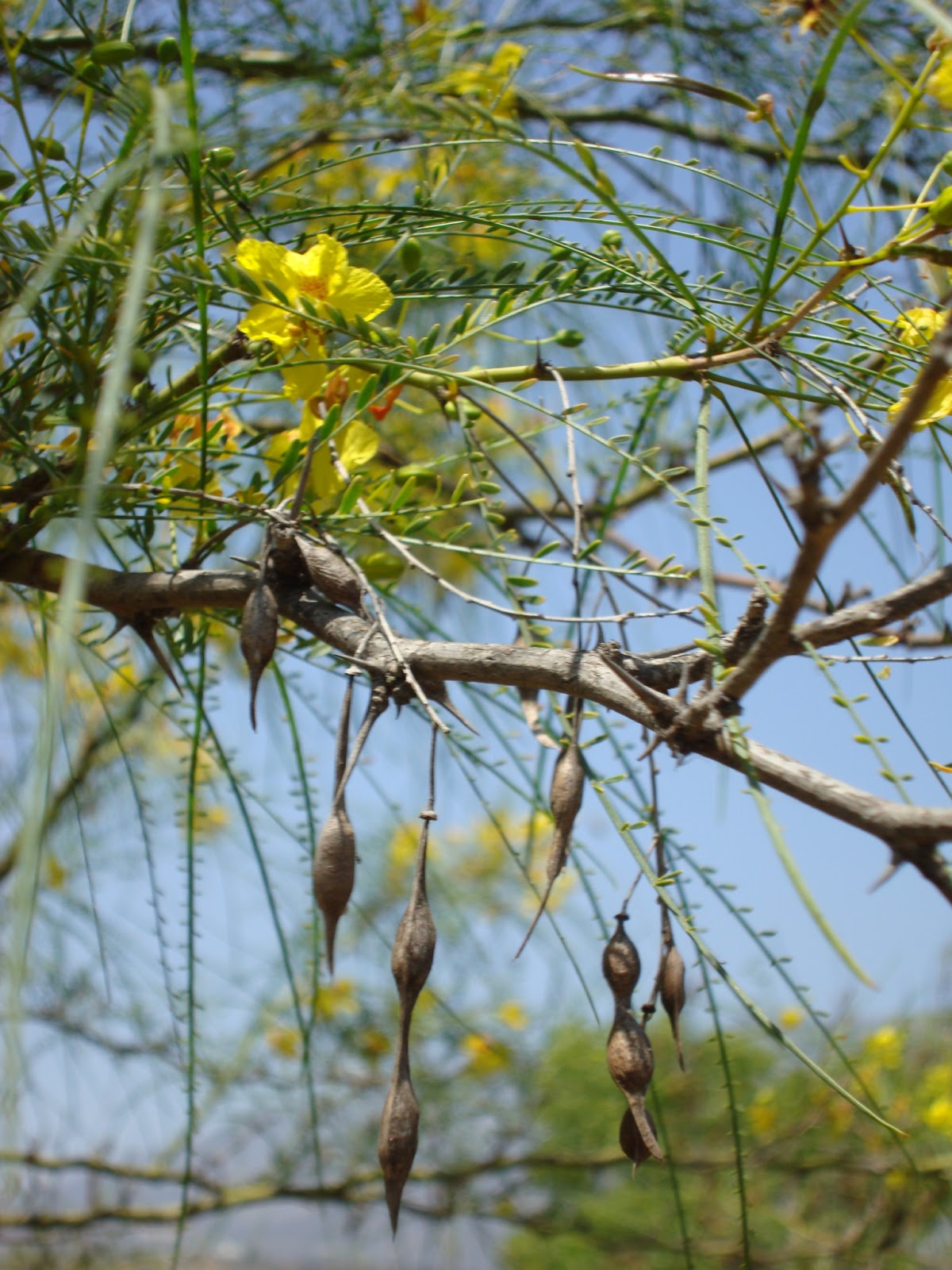
The Palo Verde tree


The desert tree: PALO VERDE (Parkinsonia microphylla and P. florida)

I recently re-discovered the Palo Verde tree, growing where it shouldn’t be growing near the Pasadena area.  It was probably spread there from a seed spread by a bird.

This desert tree is usually very inconspicuous, but when it flowers, it’s very showy and beautiful with its conspicuous flowers divided into five yellow petals.  The bark of the younger branches are green, hence the name.

There are thorns, and long ferny leaves, and pods that hang from the tree.

The tree is not particularly common, but is used more and more for landscaping since it’s drought-tolerant and beautiful when it flowers. In the wild, it’s found in the southeast deserts of California, into Arizona and down into Baja.

For the desert Indians, the seeds were the food from this tree, often eaten green by the  Cahuilla, Yuma, and other people.  Once mature and dried, the seeds were like little rocks, and would need to be ground into a flour, or parched, and then eaten. Sometimes they were sprouted.

Generally, the flour from palo verde would be made into a porridge, or something like cakes or biscuits.
Interestingly, this is often referred to as a “survival food.”  When I hear the word survival food, I think of something that you’d never eat unless you were desperate and starving – things like bark and lichens. It is thought of this way perhaps because the plant is not all that common, and because other tastier seeds – like mesquite -- were usually available to some of the desert people.

I’m curious – does anyone out there have personal experience with this seed?  I’ve eaten some and found  them good, and I don’t think I would classify them as “survival food.”  I’d like to hear from anyone else who has some personal knowledge of this plant.

[Nyerges is author of "Guide to Wild Foods" and other books; see Store at www.ChristopherNyerges.com]

Monday, July 01, 2013

On my book: "The Self-Sufficient Home..."


“The Self-Sufficient Home: Going Green and Saving Money”


Way back in 2000, my wife Dolores and I wrote a book called “Extreme Simplicity: Homesteading in the City,” where we detailed how we grew food, raised animals, generated power, and more, in our average home in the hilly outback of Los Angeles.
 
The “Self-Sufficient Home” book is a continuation of that work, but in this case, we didn’t strictly write about what we did in our own home. Rather, I interviewed at least two dozen other home-owners and experimenters to discover the ways in which they were practicing urban self-reliance.

 The book begins with the story of Dude McLean, former Marine who was heavily involved in self-reliance, and his experience during the 1971 Sylmar earthquake.  McLean and family survived well when much of their neighborhood was in ruins because they gardened, stored food and water, and had sufficient camping supplies and the know-how to live in the backyard.  Whenever I teach a class about urban preparedness, I begin by reading that chapter and the very real lessons learned by McLean and family.

“Self-Sufficient Home” includes an interview with Altadena architect Steve Lamb, who shares all the ways in which homes should be built to take advantage of natural principles such as sunlight, wind patterns, shade, and other site-specific issues.  Lamb points out that white roofs, and large overhangs helps keep houses naturally cooler.  During the course of writing the book, Lamb took me to a few of the places he’s worked on to show me how it’s also possible to retrofit an “average” house to take advantage of these principles.

The book shares the specific ways in which various local people, with no government aid and with no whining, went about producing their own electricity, and their own solar-heated water.  The reader is guided through the steps of making an electrical use assessment before going out to purchase any solar devices or components.  It’s important to do that assessment if you’re going to be your own power producer, so you build a system that is suitable to your situation.

There are interviews with people who collect rain water, with everything from low-tech to high-tech methods.  In fact, this is now so “mainstream” that all of the building supply companies routinely sell you all the hardware needed to turn a bucket into a rain water catchment system.

The many alternatives to the conventional flush toilet are discussed, from the expensive high-tech to the very simple low-tech methods that have been practiced for millennia.

The book also addresses all the ways in which the average urban back yard can be utilized for food and medicine production.  This begins with an assessment of the resources already on the property, coupled with a list of your specific needs and wants.  Where to get your seeds, how to produce plants from cuttings,  and ways to create your own backyard fertilizers are all included.

I interviewed a La Crescenta resident who makes his own biodiesel fuel from used vegetable oil, and ran his VW diesel rabbit on his own fuel for months. There are enough details in the book for the reader to follow in this man’s footsteps.

And lastly, there are several interviews with individuals whose lifestyles are laudable – a man who bicycles every day, a permaculture practitioner, a woman who lives in a tipi, and more. 

“Self-Sufficient Home” can be obtained via Kindle, and hard-copies are available wherever quality books are sold, or on-line.  This is a wonderful book and everyone should have a copy.

[More information about Nyerges’ classes and books is available at www.ChristopherNyerges.com, or via School of Self-reliance, Box 41834, Eagle Rock, CA 90041]
               

Timothy Snider: Man of the Trees


Pasadena resident Timothy Snider is a man of the trees.  When you’re driving around a neighborhood, or driving on the freeway and looking at all the trees in the city, most folks just see green.  Snider glances at a tree and will tell you the Latin name, the common name, and many things about the tree.  He knows how to identify trees better than just about anyone, and he knows the history and uses of the trees as well.

Snider began his study of botany at Riverside City College and continued at CalPoly (Pomona), where he thought he might have a career in the Forest Service.  When he realized they weren’t hiring, he shifted his focus to ornamental horticulture.  At Riverside City College, and learned how to key out plants using the technical botanical books. 

“Everyone was into the ‘back to nature’ thing back then, and I was mostly interested in wild plants that I could use for food,” says Snider.

Snider was a quick learner and seems to have an encylopedic knowledge of trees and plants. He was hired out of college to do street inventory work in Riverside.  This involved walking the streets in Riverside and cataloging the trees in the computer with a number.  Snider smiles and points to the tree next to where we’re standing. “This is a number 83,” he tells me, “a Cupaniopsis anacardioides, a carrotwood tree, and I would record this in my computer as an 83.”  His tree inventory work included noting the exact location, and condition of the tree.

Snider relates that this was pretty straightforward work, with an occasional dog that would chase him.

His tree identification work has taken him near remote Indian sites, from mountain tops to the deserts.  He say that although there is more diversity of trees today than there was in the days when only the Indians lived here, the trees that are here now are not necessarily more useful.  “There was mostly a grass savannah here, with lots of oak trees producing acorns, and lots of open space to hunt game.  Today, the greater diversity of trees does not produce more food, plus much of the open space is taken up by buildings and roads.”

Snider is keenly aware of the health of trees, and how this relates to the general health and wellbeing of the local populace.

For example, Snider points out that the ideal number of trees in the Big Bear area was figured out to be about 40 per acre.  However, before the massive burn 6 years ago where everyone on the mountain had to be evacuated, the ratio was about 300 trees per acre.  “This meant that there was less water per tree, and this allowed the bark beetle to cause devastation. The drought made things even worse,” explains Snider. People were unwilling to thin their trees, and so when the wildfire came, it burned out of control.  Snider was called in after the fact to assist with tagging trees that had to be removed.

Snider is working on a plant identification book using primarily photos.  (He also has a book in the works compiling all known guitar tunings).

Part of the problem of the Big Bear firestorm was convincing residents to thin out the trees. “The residents said the trees were too pretty, and wouldn’t cut them. So the fire came in and forced the issue.”

Snider also has a gripe with tree-pruners who don’t know trees.

“Most tree pruners know nothing about trees or pruning, and some only know how to use a chain saw.  Most do not know how to shape a tree, and they overprune in hopes that they will not need to come back to the tree soon.  But in fact, trees grow twice as fast when they are overpruned, since the tree is trying to compensate for the imbalance between the root system and the leaf system.

“You should never remove more than 20 to 30% of the foliage of a tree in any one season,” says Snider.

If looking for a good tree pruner, Snider suggests talking to the Ornamental Horticulture Department at CalPoly. 

If you ask Snider to name the best tree for your backyard, he’ll tell you that’s the wrong question. “There is no best tree,” he explains, “since we need to take into account the lighting and shade conditions, the soil, the amount of space, the size of the mature tree, and maybe other factors.”  To see some examples of trees and their conditions, Snider suggests going to Rancho Santa Ana Botanical Gardens in Claremont, the Arboretum in Arcadia, or Huntington Gardens in Pasadena.

Another interest of Snider’s is the natural history of the area, especially unique Native American calendric sites.  One such example is Mockingbird Canyon, where the light of the sun makes a dagger through a circle on the winter solstice.  This was a site used by the desert Cahuilla Indians and others.

“These calenders in stone told the people when to find food, when to do the ceremonies, and about the changing of the seasons,” explains Snider.


Friday, June 28, 2013

Gary Knowlton: Man of the Trees


By Christopher Nyerges

[Nyerges is the author of “Enter the Forest,” “Self-Sufficient Home,” and other books.  He teaches regular self-reliance classes and does a weekly podcast on Preparedness Radio Network. He can be reached at School of Self-Reliance, Box 41834, Eagle Rock, CA 90041, or www.ChristopherNyerges.com.]


Gary Knowlton is standing next to a young redwood tree on his hillside property. He says, “Treat everything as if it were sacred, and lo and behold, you’ll find that it is.  We need to completely re-evaluate the way we interact with nature.”  He looks at the redwood tree and adds, “If trees are treated in a non-sacred way, it offends and disrespects our very source of the breath of life.  We should never vandalize and mutilate trees due to some perceived hazard, or because of our perceptions of order and neatness.  The new paradigm that we need is a deeper respect for the tree.  If we respect the trees and treat them properly, they will give us their bounty of oxygen, and fruit, and leaf.  But if we ignore their health and safety, it is always counterproductive.”

Knowlton is not an evangelist nor a shaman.  He’s a La Crescenta man who’s been concerned about the proper care of trees his entire life. By profession, he does restorative work on valuable old native trees, such as oaks and sycamores, and is considered to be one of the best among fellow arborists. 

He’s concerned that most of us underrate the tree, regarding it as a commodity, or worse, as a nuisance. But Knowlton sees it differently.  Trees are valuable because their root systems hold the soil together, they create windbreaks, they produce massive amounts of oxygen, and they give us fruit, leaf, and wood for countless purposes.  Trees provide homes for myriad forms of wildlife, making them an integral part of what Knowlton calls “the circle of nature.”  When the circle is broken, he points out, nature sometimes rebels.

As part of his work, he regularly prunes trees, seeking to discover the tree’s natural shape and needs before making any cuts.  “We often have to convince our customers to allow us to do what is best for the tree,” he says. “Often a homeowner will want a tree pruned in a way that is not beneficial to the tree. The homeowner may be concerned about neatness, order, lines, and appearances, but not about the needs of the tree.  If we did what some customers asked, it would damage the tree and set into motion a series of unwanted responses, such as branches falling, or even the tree falling over.  But a healthy tree, properly pruned to its natural shape, is actually very reliable and will be better able to survive high winds, heavy rains, frost, and drought.”

Knowlton explains that the tree fits into the intricate cycle of nature, and that most of the actions of typical “gardeners” are in ignorance of the ecology of the tree.

Knowlton prefers minimum interference, accepting the fact that nature knows what is best.  “I prefer the benign neglect management style.  No rake, no weedwacker, no blower.  It is better to feed the fallen leaves back to the tree than to rake it up and throw the leaves away.  After all, the leaves are the tree’s food.  If you all allow all the leaves to remain around the base of the tree, they create a thermal barrier, and moisture stabilizer and they gradually decompose and feed the tree. This is what happens in the forest.”

He regards the use of blowers to “clean up” yards as almost entirely unnecessary since it completely ignores the cycle of nature for the questionable goal of order lines and cleanliness.  “Those guys with blowers are strip-mining the soil. They are hauling away the productivity of the tree and merely discarding it as if those leaves were trash.  The influence of leaf blowers on the quality of life is so great with noise and dust and the unnecessary remove of leaves that it isn’t worth having them.  Leaf is  not litter. It is the life of the soil.  When you simply throw that away, you are taking away nutrients that should be allowed to feed the tree.”

“Too many people assume that gardeners know about trees,” says Knowlton.  “Some do, but most do not.  Your yard can receive a tremendous amount of damage and even dollar depreciation from such individuals. The trees’ value is based on species, location, health, and size.”

Knowlton explains that the number one cause of death of urban trees is root damage, caused by a number of ways. For example, painters will clean their brushes and pans and dump the water near the base of a tree.  Sometimes trenches are dug for water or gas lines and these damage the roots.  Another big culprit in the death of trees is the weedwacker. “Many gardeners trim unwanted plants from around the base of trees, and typically cut the tender trucks of the trees.  This is one of the easiest ways of killing trees. I’ve seen it happen frequently,” he says with dismay.

“The leaf blower and weed-wacker are two gas tools that we can do without,” says Knowlton.

“I try to integrate everything I do with the idea that every thought and action has an outcome.  We need to take responsibility for what we set into motion.  That is the way to know whether or not to take an action,” shares Knowlton.  “What is the outcome if I plant this tree?  What is the outcome if I cut down this tree?  Am I looking forward seven generations to the consequences of my actions?  This is all part of being aware of the circle of life, and being able to act with a sacred mood.  We cultivate this sacred mood not simply by thinking about it, but by the way we take action,” he says.  By now, he’s sounding more and more like an evangelist or a shaman.

Knowlton chooses to be a living part of the solution.  He doesn’t regard any tree prunings or chips as “trash.”  He uses it all.

On his backyard hillside with its 60 degree angle, he created a pathway entirely from mulch from his tree work.  “There was no hardscape, no bricks, no foundation,” explains Knowlton, pointing to the hillside covered in fine wood chips.  “And there was no erosion.  This is how we put the mulch to work.  The mulch not only completely absorbs the water from the heaviest rains, but it becomes food for earthworms as it decomposes.”

Knowlton wants everyone to see themselves as part of the intricate web of life.

“We should not break the circle of life,” he says. “We need to learn to see the circle of nature.  We can interact with nature in a productive way, but we should not do so in an interfering way.”

He points out that he has used many truckloads of mulch to create his hillside pathway, and that there is also less of a fire hazard because of the mulch.  In general, Knowlton advocates at least 3 to 4 inches of mulch for hillsides.

Besides chipping up wood for mulch, Knowlton tries to utilize as much of the prunings as possible. He saves hollow log sections for drums, and he has a pile of straight branches which he uses for fence staves.

Knowlton, who has some Iroquois ancestry, also has a small sweat lodge in his yard which he and his wife Angie occasionally use.  The sweat lodge is a dome-shaped structure made from thin branches.  They first cover it with tarps and then bring in hot rocks.  When you enter the sweat lodge, it is dark, hot, and said to be very therapeutic.

“The sweat synthesizes the ancient worship and healing practices that have existed globally in the past,” says Knowlton.  “Going into the sweat lodge is like a return to the dark womb, or a rebirthing of awareness of higher consciousness. We seek and find our spirituality through myriad paths. The sweat lodge is one such path.”

Knowlton and his wife experiment with solar devices and other technologies as ways to “live lightly on the earth.”  They also use a wood stove which is fueled with tree prunings, and then the ashes are returned back into their soil.

Knowlton pauses and looks at his redwood tree where we began.  He takes a deep breath.  He puts his hand on the tree. “The tree is a great transducer of energy, of prana,” he declares. “Our salvation lies in our recognizing the value of trees, and not ruthlessly killing them,” he tells me.

You can learn more about Knowlton by going to www.treecarepruningandplanting.com.

Thursday, May 30, 2013

On my book: "Extreme Simplicity"


WHY I WROTE MY BOOKS:
EXTREME SIMPLICITY: Homesteading in the City


[Note: You can get an autographed copy of this at the store at www.ChristopherNyerges.com]
 
"Extreme Simplicity: Homesteading in the City" is perhaps my favorite of the books I have written because it is like a personal diary of how my wife Dolores and I worked towards our goal of "living lightly on the earth," even though we had a small budget and lived in a small suburban Los Angeles home.

We were doing what our Appalachian friend used to describe as "living country in the city."  We pursued all aspects of self-reliance, and wrote about it. Starting as soon as we moved in to our new home in 1986, we began task by task with limited income.  We used our front lawn  to grow food, we recycled our wash water, collected rain water, had chickens, a duck, bees, and a pig, had solar water heating and solar electricity, a wood stove, and we planted fruit trees and food everywhere.

We describe our efforts to do "integral gardening" on every bit of usable land, to produce food (for people and wildlife), medicines, fragrance, shade, and useful tools. We describe the details of what it meant to raise earthworms, chickens, rabbits, bees, a goose, a pig, and our dogs in their typical suburban back yard.

We took the reader along their journey to installing a wood fireplace, solar water heating, and a solar electric system.

 Though there is much "how to" in this book, it is full of personal stories and rich reading of the learning they experienced along the way. There is a section on recycling, and a unique section about the economics of self-reliance.

It’s worth noting that this is not a book we planned on writing. In 2000, we were called by the Mother Earth News magazine to write an article about our meaning of "alternate health" methods, and we wrote about the methods that could be called "new age" and could be called Hypocratean.  We were on the cover, and a book publisher contacted us to see if we could turn that health article into a book. We said yes. But when we submitted the manuscript to the publisher, they said, hmm, not exactly what we were looking for.  [That book, Integral Health, will be published eventually]. So they asked us if we could just write about how we live, which we did, and it became Extreme Simplicity.

Extreme Simplicity, first published in October of 2002, will be re-released from another publisher in August of 2013.  It will be available wherever books are sold, from Amazon, and from the School of Self-Reliance, Box 41834, Eagle Rock, CA 90041; or www.ChristopherNyerges.com.
  
  
HERE ARE SOME SELECTED EXCERPTS
  
WHEN RAMAH DIED
When Ramah actually died, Christopher was holding her head in his hands. She cried out a loud farewell as she died. He doesn't like to admit it, but Christopher cried most of the day.

A dear friend of our visited us that afternoon, and we spent the next seven hours discussing death, canine friends, and Ramah. Our friend had brought along a "Dear Abby" article about a boy who had wanted a priest to help him hold a funeral for a dog. The priest agreed. The boy asked Abby if there were dogs in heaven. It was quite an interesting article and made us realize that we weren't the only ones who had such a close relationship with our dog....

Christopher carried Ramah to a spot in our "Island orchard." He had dug a large hole in a spot where he felt that a tree might grow. Christopher carefully buried her with her favorite bedding - his old sleeping bag - and then he planted an avocado tree over her. It all seemed so right, so proper. Dogs are not the same as humans, yet our attachments and feelings can be intense.

A week after we buried our dog, we had a memorial gathering where we invited some close friends to remember Ramah....

In telling the story of Ramah, we have gone full circle, from describing here as a close friend - a member of the family - to acknowledging how her body now fertilizes an orchard tree. Where possible, we choose to let our animals fulfill their whole lives right here, on our little urban homestead. Even in death they play their role, promoting more life. Such "complete cycles" are something that many more people took for granted a hundred and more years ago, when most folks lived in rural environments. Today, by our passive choices, we seem to have lost this understanding.
  
WOOD FIREPLACE
Our freestanding fireplace has completely transformed our home. We would strongly encourage anyone without one already to seriously consider installing one. On very cold nights, we had been using those small electric heaters that really drive up your electric bill. The fireplace made the house really feel like a home, and we now are uncertain how we got along without it.

In our case, the transition to wood heating was fairly easy, because we had plenty of firewood readily available. We were actually doing a neighbor a favor by cleaning up and carting off large amounts of dead and fallen wood from his property. Our first season of firewood came entirely from our weekly cleaning of his yard, just for the cost of our labor. How's that for a win-win situation?
  
TIME AND THE QUALITY OF LIFE
Many people today believe that they're spending all their time working, yet with very little in return. Unfortunately, such realizations may come too late to be remedied.

We think that the Amish people have the right idea when they keep their schools and work close to home. They don't have to go a long way to a job, thereby avoiding wasted time and energy, unnecessary expenses, and disconnection from their community. They can protect their families from undesirable influence, and there is the added bonus of having youngsters nearby where they can learn a trade from an early age. The Amish are firmly committed to valuing "quality of life" over all the stuff that our modern society deems important or indispensable - car, home entertainment system, fancy clothes, foods bought for "convenience" and prestige rather than fresh garden flavor and nutritional value.
  
4 MAGIC WAYS TO IMPROVE YOUR FINANCIAL SITUATION
Once, during a period of homelessness before we were married, Christopher was engulfed in thoughts of "poor me" and "I'm destitute," and he could scarcely see a way out of the darkness. Dolores provided him with a simple set of practical tools that anyone can use if only they choose to do so. Here are four "magic" ways to improve your financial situation:
    1. Never waste anything.
    2. Continually improve your personal honesty.
    3. Leave every situation or circumstance better than you found it.
    4. Tithe to the church (or organization) of your choice.

We know that these are genuine practical solutions. We have heard people say that they cannot make these efforts - such as tithing, or improving an environment - because "we are poor." Our perspective is that they have their reasoning backwards. They are poor because they do not engage themselves in the world in these ways. Logical thinking leads to erroneous conclusions when the premise is false.
  
3 STEPS TO HOUSEHOLD ENERGY EFFICIENCY

1. You can do without some electrical devices.
This will probably involve changing your behavior, for instance, thinking twice before switching on an electrical tool or appliance when a non-electric alternative will work just as well or better.

2. You can learn to use your existing devices more efficiently.
 This step, too, requires changes in habit, but once you've understood the extra expenses caused by inefficiency and waste, you'll feel good about it - plus you'll save money by practicing efficiency.

3. You can purchase new appliances that render your household inherently more energy efficient.
 This step requires initial outlays of money, and in some cases higher short-term expenses, but with certain especially wasteful appliances, the best way to save energy and money is to immediately replace the old, wasteful model.
   

Friday, May 24, 2013

On my book: Guide to Wild Foods


Christopher Nyerges
Why I wrote my books:
Guide to Wild Foods

[Nyerges is the author of 10 books, and teaches regular classes through the School of Self-reliance. He does a weekly podcast at Preparedness Radio Network, and blogs regularly at www.ChristopherNyerges.com.]

The first book I wrote was “Guide to Wild Foods.”  It represented my attempt to put my various notes and articles about plant lore and ethnobotany into some usable format.  If these notes were organized, others might be able to travel over the path I’ve struggled over a bit more easily.  But I actually compiled and wrote the book for my own personal use  and was happy to see that others found the book worthy of purchase.

I began “Guide to Wild Foods” in 1975, and I began by simply alphabetizing, by common name, all the notes on the various plants I’d been learning to identify, and then learning how to use them for food, medicine, or something else.

In my bedroom of my parents’ home, I kept my crude of my observations, my studies, and my recipes scattered in a somewhat organized fashion over every flat surface.  In 1976, I began by writing weekly columns for the now-defunct Altadena Chronicle as my first attempt to begin publishing my book.

With the help of various mentors, I began to more fully organize the notes into cogent chapters, got illustrations, and got the whole book printed and bound.

The first edition was a dream come true, but contained many typos.  By the next printing, I’d cleaned up the errors in the text, improved the drawings, and expanded the text. In fact, since it’s first appearance in 1978, I’ve updated the book nearly every time there was a new printing.

One of my greatest surprises came when I was listening to the old American Indian hour on Pasadena City College Radio early one Saturday morning. Dorothy Poole, aka Chaparral Granny, was talking about the uses of certain local wild plants.  As I listened, it sounded vaguely familiar.  I quickly pulled out my copy of “Guide to Wild Foods” and opened to the plant she was talking about.  Imagine my surprise to see that she was reading directly from my book!  I felt honored that she felt my compilation and personal commentary was worthy of sharing on the American Indian hour.

The book helps the beginner understand the basic botanical terminology, and quickly shows the reader how to best utilize many of the common wild plants for food, medicine, soap, etc. 

Many of the plants listed in this book are not  native, and are considered invasive weeds. They are the plants that gardeners love to pull up and toss in the trash, or worse, to spray Roundup on them so they don’t come back.

But it turns out that some of the wild foods are more nutritious than much of what we find in the supermarket. And they taste good too, if you simply take the time to learn how to prepare them.

In “Guide to Wild Foods,” you learn that the brown pod from the carob trees planted all over Southern California are edible, and are an excellent source of calcium and B vitamins.

You also learn that dandelion is the richest source of beta carotene (not carrots), and that purslane is the richest plant source of Omega 3 fatty acids, and that the common lambs quarter is like nature’s mineral tablet.

I include many of the Native American uses of plants, such as the yucca plant which was a valuble soap and fibre source, as well as three types of food. And you learn about many of the natural cures to poison oak, including the seemingly unusual treatment that I’ve done for the past 30 years.

“Guide to Wild Foods” is available at Amazon, at bookstores, and at www.ChristopherNyerges.com.  I hope you enjoy your copy!

On my book "How to Survive Anywhere"


Why I wrote my books:
"How to Survive Anywhere"

Nyerges is the author of 10 books, and teaches regular classes through the School of Self-reliance. He will do a blog on most of his books over the next month or so.  His books can be obtained at  www.ChristopherNyerges.com.


Two of my books are closely related, “Testing Your Outdoor Survival Skills” and “How to Survive Anywhere.” 

I began teaching a survival skills class at Pasadena City College in 1980, and have taught it at 3 other colleges as well, not to mention endless lectures and workshops. For me, the act of teaching forces me to organize information in the most useful and easily digestible manner (boy, I sound like a chef!).  I worked to organize the subject matter and to cover one topic at a time. I know this may sound like a no-brainer, but I remember some classes on survival and related-topics that were rambling discussions with the students with no sharp focus, and no show-and-tell.  I wanted to present to the student a situation that I felt would facilitate quicker learning, and more retention.

Over time, my survival skills courses began to cover not just the skills that the lost hiker should know, but also the skills that every urban dweller should consider in the event of a disaster. In my early years of teaching, the subject matter more-or-less organized itself into discrete categories: Water, food and plants, fire, shelter, tools and weapons, first aid, navigation, alternatives to electricity, toilet alternatives, and woven throughout all this has been the necessity to have a good mental outlook.

These categories have become my classes with their endless permutations, and constant updates. I found that one of the best ways to involve the student was to ask questions rather than just make statements. I gradually developed a series of questions for each category, which I used as the basis of my classes. Most of the questions had common-sense answers and were not intended to trick the student, but to cause the student to think logically and to see the relationships of things.

As I refined those questions into my class passouts, Peter Gail (of Goosefoot Acres) suggested that I turn them all into a book. So I compiled them into my spiral-bound book, “Testing Your Outdoor Survival Skills.”  Scouts and schools have since used the book for their own educational programs for years now.
           
In time, I developed my questions into a survival manual that I hoped would benefit not only wilderness travelers but anyone living in the cities and rural areas as well.

I filled in all the gaps from my “Testing” book and answered all the questions and added a lot of photos from my classes, and the result was “How to Survive Anywhere,” my most popular book to date.  The title was the publishers’ idea, not mine, since I thought it sounded a bit presumptuous.  However, it has worked, and is my most popular book to date. 

It is divided into chapters similar to my class topics:  Water (finding it, purifying it, storing it), Fire, Lighting, Energy (all the things you need to know when the power goes out, as well as how to make a fire from the most primitive to the many modern methods), Health and Hygiene (how to stay clean, how to make a toilet, how to use plants for soap, etc.), Clothing and Shelter (obvious topics), Fibre (all the ways to create and use plants for rope, weaving, clothing, etc.), Food (wild foods, growing foods, storing foods), Tools and Weapons (knives, primitive weapons, make-do, etc.), First Aid (though I defer to the Red Cross manual), and Navigation (again, I defer to other complete books on the topic).

The last chapter is called “What is Survival?” and it is this chapter which has drawn criticism, since I include a discussion on how all our choices affect our destiny, all the moral, ethical, and spiritual choices that we like to kid ourselves and believe it’s all “private.” In fact, I list the 10 Commandments and The Golden Rule as some of the best “survival tools” of all time. What you sow, you shall reap.

I was criticized for including in a “survival manual” John Wooden’s Pyramid of Success, the greatest coach of all time, who always said he wasn’t training basketball players but was training people for life. To ignore these principles is the greatest ignorance. The critic felt that I should only include “Boy Scout skills” in a survival guidebook.  OK, there are many survival manuals out there – mine is different.

I also include economic considerations, though only briefly, since there are detailed books that cover “economic survival.” 

In “How to Survive Anywhere,” I even address the topic of whether or not a dark age is looming, and I provide some practical solutions that anyone can act upon. 

It’s a great book, and I hope you get a copy.  According to actor Ed Begley, Jr., “How to Survive Anywhere shows us that ‘survival’ is a mind-set, and that by understanding the principles of survival, we’d fare better in the woods, or in the aftermath of an urban disaster.”

The book is available wherever books are sold, at Amazon, and from the Store at www.ChristopherNyerges.com.  


Wednesday, May 08, 2013

When Shiyo Died -- extract from "Til Death Do Us Part?"


[An extract from “Til Death Do Us Part?” by Nyerges, which is available on Kindle or as a pdf from the Store at www.ChristopherNyerges.com.  Shiyo was Dolores’ mother who died in 1983.  Dolores died in 2008.]

In the ideal world, we learn from other people’s experiences.  This is most likely to occur when we are direct witnesses to the events from which we might derive learning.  But it does seem that only the wisest among us is capable of real learning via other peoples’ experiences.
            We’re doomed to repeat those experiences so that we (ultimately) learn through our own personal experience.  This is generally how I received my “education” about death.  I felt I wanted to learn more about this unavoidable phenomena – but polite poetry and priestly sermons, despite their sincerity – offered me nothing.
            In 1983, the cancer, surgery, and failing health of Dolores’ mother Shiyo provided us with one of many opportunities to face death.

            On the night Shiyo was dying, I was gone somewhere and Dolores went to Temple City with our friend Todd Pike.  Later, Dolores reported back to me her very unpleasant and sad experience.  When Dolores arrived at Shiyo’s home, Shiyo was not fully mentally coherent, and was apparently entering the first stages of dying.  She was not properly responsive when Dolores tried to talk to her, or ask what she could do.  In her uncertainty and panic, Dolores called the hospital – much to her later regret – and two young men quickly arrived by ambulance, with a gurney.  The two men joked among themselves and chatted about their personal lives, treating Dolores’ mother as some impersonal task that had to be done. They talked with Dolores, and then quickly and efficiently strapped Shiyo to their gurney, much like you might securely strap a refrigerator to a dolly.  Dolores felt that her mother was treated like a piece of meat, some mundane commodity, but not her mother.
            Dolores followed the ambulance to the hospital.  Shiyo was not coherent, and died that evening.
            It was a very difficult time for Dolores, though she did her best to hide her pain She had lots of mixed emotions, and lots of regrets about not resolving her lifetime of unfinished business with her own mother.
            As was Shiyo’s wish, Dolores had the body cremated. 
            Dolores then solicited the help of Todd and I, and others, to prepare a memorial event for Shiyo on the grounds of the Pacific Ackworth Friends school in Temple City, where Shiyo taught.
            Todd and I met Dolores and planned an agenda for the memorial, including readings and a home-made meal.  We all helped call people and mail out invitations.  Dolores handled herself reasonably well during this stressful time, though no one would have blamed her if she broke down in tears.  But that never happened.
            She worked with us to create a serious and touching sendoff for her dearly beloved mother.
            On the day of the memorial, Todd, Dolores, and I met at Shiyo’s home about two hours early and set up the eating and gathering area, and the outside memorial area on the school grounds adjacent to the home.  Lu Kuboshima was there, as well as all the old family friends of Dolores and Shiyo.
            People trickled into the outdoor seating area, around the grand stone stove that was built many years earlier by Dolores’ father Lyle (deceased many years earlier).  I didn’t know everyone on Dolores’ side of the family yet, but I knew many.
            Dolores opened the ceremony with a short talk about Shiyo, and there was some music.  Numerous friends of Shiyo’s stood up and talked about her.  It was very much like the typical Sunday Friends gathering, where people speak as the spirit moves them.  One tall skinny elderly man – he was probably in his 80s – stood up and said nothing, but danced around in a circle while waving a long silk scarf.  It was quite a refreshing spectacle.  Then the man sat back down, never saying a word.
            I read a short poem that Dolores had selected. I had already come to know and love Shiyo.  I already felt that she was my mother-in-law, though Dolores and I didn’t get married for another three years. So when I read the short poem about Shiyo, I found it hard to not cry.  A clay bust of Shiyo, made by one of her art students years earlier, stood on the edge of the large stove.
            I had no preconception as to what such a ceremony should be like.  It was the first time I’d ever actively participated in a memorial.  I suppose I expected something deeper, fuller, even a more-meaningful in-depth look at Shiyo’s life and how she affected everyone and changed the world.
            But I think I was still in the mode of expecting answers, even expecting “enlightenment,” to come from somewhere else outside of me.  As if all that was expected of me was to be in the right place at the right time, to read the right book, to be exposed to the right people.  These things, of course, can play a significant role in one’s development and evolution, but what I didn’t fully grasp was that the external forces could only enhance – but could not replace – the necessary inner condition of being ready, and willing, and able to evolve to whatever one’s “next level” might be.
            Plus, I hadn’t yet learned and realized the Universal Principle of “AS ye give, so shall ye receive.”
            Thus, at Shiyo’s memorial, I was only in a posture to receive a limited amount of learning about death.  I was expecting someone to give it to me.
            But learn I did, little by little.  Along with Dolores, I learned to give, and at times, to give sacrificially so that others might have a better learning experience. 
            But on that day, I could only feel deeply for Shiyo, and try to feel Dolores’ pain.
            When the memorial was over, we all went inside Shiyo’s home and we served soup and other healthful dishes that Dolores had arranged for guests to make. It was a great event, and I’m so glad we did it “at home” and not at some commercial funeral parlor where we’d be quickly rushed out once it was all done. 
            We all sat and talked about Shiyo, and got reacquainted. In that sense, the gathering was more for the living than for Shiyo, for it gave us the chance to see how each of our lives were touched by Shiyo, and how her life lived on in each of us.
            I was still left with many questions, some of which I was attempting to answer through my studies of  the “Thinking and Destiny” book.  Is it possible to really know what happens after death?  Should I fear death?  What is the purpose to these very temporary lives we lead, and then die?  Where is Shiyo now?  Will I go there?
            Lots of questions.  Were the answers “unknowable,” as Joe Hall avers?
            For the most part, those were not the questions or topics that we discussed that afternoon.  We did, of course, talk about Shiyo, and other matters.

            Then, afterwards, Dolores had the unsavory task of handling her mother’s estate, which included a yard sale where it seemed that all the vultures descended “looking for a deal” (or was it “looking for a steal”?).  It was left to Dolores to dispose of the many possessions of her mother, which caused behind-the-scenes bickering and accusations for years.  Perhaps that’s just one of the things that “goes with the territory” of handling an estate.  Still, it only made Dolores’ pain of losing her mother even greater.

            Dolores kept and maintained Shiyo’s library of Indian books and booklets, and her many writings.  One such writing was the account of Shiyo’s best friend who married a Navajo man during the Great Depression and moved to the Navajo Reservation.  When Dolores and I rediscovered that manuscript in her mother’s boxes, we attempted to get it published.  We finally succeeded in doing so, and in 2002, Naturegraph books published “The Winds Erase Your Footprints,” an incredible true story that reads somewhat like a Tony Hillerman novel.


Wednesday, May 01, 2013

In Honor of My Mother


A story about the death of Marie Nyerges, an excerpt from Christopher Nyerges’ Kindle book, “Til Death Do Us Part?”, also available as a pdf from www.ChristopherNyerges.com

 There was the cancer diagnosis of 1997.  I was devastated.  I could not believe that it was possible that my own mother could have cancer, and both Dolores and I spent time with Marie (my mother) talking about the possible results of the surgery her doctors were recommending.  I recall some nights at home feeling lost, hopeless, realizing Marie could die from the surgery alone.  After all, she was nearly 80 years old.  I’m sure Marie was fretful, feeling a sort of terror, frightened, hopeful though that something could be done. Frank, my dad, her husband, was quiet, perhaps uncertain of what to do, and probably somewhat unable.

She eventually had a surgery, and lived for many more months.

After the surgery, I visited her in hospital. They said it was very successful.  I met her in hospital hall while she was walking, and she smiled and we walked together.  I told her I was happy to see her.  She seemed to be very spunky, up and about walking. 

After, she seemed happy, relieved, but it was now difficult for her to get enough food, and to eat small portions all day.  My sister Peggy helped when she visited from Canada, and Marie improved, but she still was somewhat on her own.  Marie seemed to be fighting an uphill battle, and was visibly depressed when we were told, sometime in spring of 1998, I think, that cancer was back and spreading into her lungs.  I could feel her pain, her fretting, her desire to live. 

She soon went into hospice care, and Marie did seem happier there at first.  Frank came and sat with her every day. I tried to visit every day, or most days, and visitors could come at will.  I truly pictured that my mother would get better and return home. I still picture that.  I don’t know what Marie pictured.  But in those few weeks there, I was able to come and walk with her at night when the halls were empty.  I felt that we were two friends, that I began to know her from the beginning, and I very much enjoyed our talks about things.  How I enjoyed those moments.  I could feel Marie as a strong spirit in a frail body.  She was often apologetic, about all that everyone else had to do for her now, but I loved being able to assist and to be there.


Think about it -- after a lifetime of what she did for so many others, always buying things on sale for family members, sending notes, phone calls, now it was her turn to be attended to.  I had no complaints.  The days went by, and went by, and it was clear that her food was substandard, and that she was not as happy as she should be.  Remarkably, I still believed Marie would be well, and would be healthy and vibrant, and in my mind, that IS the way she still is. 

One day a few weeks later, Marie told me she wanted to go home, that Frank was looking into her going home and getting a  24 hour nurse. That made me happy, to think she would be back in her own home.  But she became unresponsive a few days later, and I went to see her in the hospice care.

 When I arrived, I put my hand on Marie’s head.  She was hooked up to oxygen, and her eyes were fixed ahead.  She was alive, but not responsive, though I felt she could hear me, and I talked to her.  I cried for awhile, and closed my eyes.  I tried to Feel-into this person, my mother, Marie.  She was breathing with eyes straight ahead. After awhile I felt I was with Marie.  My eyes closed, I began to see pictures, which I assumed were her pictures.  Childhood -- seeing the front of her family farm house in Chardon, Ohio.  I could sense that Marie was “waiting” -- maybe confused, waiting for us, her children, to come around and to say goodbye, that it is OK.  I asked her how she was, and she “responded” “What now?”  I tried to look at the pictures with her, tried to mentally look at her pictures with her, whatever it was that she wanted to see. 


I saw my childhood, the Cub Scout activities at home, counting pennies and dimes, having tantrums on the kitchen floor, her work, her fears, her doubts, and the many interests and activities that she tried to pursue with me, such as learning Spanish, practicing karate, wild foods.  I saw her focus on Virgin Mary and the League of Mary activities at the church, the desire to save the world by alerting people to change their lives. 

This was her world I was seeing, and I sensed that she did well, in this world, and that she had what could be called a good life.

I was mostly silent with her, holding her hand, my other hand on her forehead, and I knew that she was just waiting now.  All was over, and she wanted to go on.  It seemed she was waiting because she thought we wanted to say our final goodbyes.

A priest came to give the Last Rites.   I closed my eyes, with my hands on her.  I am breathing deeply, and I felt my breath as a circuit through one hand, through Marie’s body, and out the other hand.      

I could “see” a pulsating opening, the so-called tunnel that we have often heard about.  It was right there, and she was ready.  Marie was right  at the tunnel, waiting, ready to go on, only waiting for us, to allow us to say goodbyes.  So she is done with the world.  There is only the body, which is now a distant pain, a body that no longer works.  She is free   She is very close to those of us who are here.  She is accepting. 

I told Marie, I’ll never forget you.  You will be with me always.  We are conversing now, silently,  and I told her we could talk by sending pictures to one other’s mind. 

In my mental communication, Marie is smiling. Her radiant smile is not the skin and bones lying on the bed.  She is smiling.  Marie, I tell her, I didn’t know it would be like this.  She is ready for rest, ready for peace, ready for on-going.  She said “please don’t worry for me.  Why worry for me, she smiles. I am ready to go on. I am done.”  She tells me though that she is concerned for Frank, and that we should watch over him.             
 I got a call about 3:45 or so, saying that Mother had stopped breathing.  She had died.  It was over.  I dressed and quickly went over, and Jean Marie and Mary Sue were still there.  I embraced mother and could see her body now noticeably faded.  I embraced her and told her again I loved her, that I was glad the pain was over, that I would miss her always. 

There was a feeling of great relief.  Her friends Jean Marie and Mary Sue said they had just finished saying the rosary next to Marie and then she stopped breathing.